How to pack and use a garment bag
Hanger, plastic, layers, fold, carry, unpack. How to pack a garment bag so the suit or dress comes out sharp, with tips for shoes, two outfits and the overhead bin.
To use a garment bag, hang your suit or dress on a sturdy hanger, cover it with a dry-cleaning bag, hang it in the garment bag and smooth it flat, then zip the bag closed and fold it along its own seams. Carry it flat or folded, lay it on top of the other bags in the overhead bin, and take the clothes out and hang them as soon as you arrive. The steps below show how to pack a garment bag so the suit comes out sharp.
It sounds simple, and it is, but small details decide the result: the hanger, the order of the layers, where the shoes go and how you fold the bag. This guide covers each one, for suits and dresses, in a classic suit bag and in a garment duffel.
What a garment bag does, and what it does not
A garment bag keeps clothes on their hanger, so the jacket keeps its shoulders and the trousers keep their crease. It also protects them from dust, rubbing and the other things in your luggage. That is why a suit bag beats folding for anything that has to look sharp.
What it does not do is stop every crease. Most garment bags fold in half or in thirds to carry, and the clothes bend where the bag bends. Good packing makes those bends soft and easy to steam out. Our guide to what a garment bag is explains the main types, from bi-folds to garment duffels.
What you need
- A shaped hanger. A wooden or sturdy plastic hanger with wide ends supports the shoulders. The Woolmark Company recommends shaped or padded hangers for woven wool. Thin wire hangers dent them.
- A dry-cleaning bag. The thin plastic kind you get from the cleaner. It lets fabric slide instead of creasing.
- Tissue paper (optional). Useful for delicate dresses and for padding folds.
- Shoe bags. Shoes should never touch the suit.
- A soft roll. A rolled T-shirt or sweater placed at the fold of the bag gives the clothes a curve to bend around.
How to pack a suit in a garment bag, step by step
This is the core method. It works for a suit, a blazer and trousers, or a sport coat, and it is the same whether you use a garment bag for a flight, a car trip or a train.
- Prepare the suit. Make sure it is clean and pressed, let it cool, and empty every pocket. Pens and phones print their outline into cloth under pressure.
- Hang the trousers. Fold them along the front crease and drape them over the hanger bar, or clip them by the hem if your hanger has clips.
- Add the shirt (optional). Button it, including the top button, and hang it over the trousers. Drape the tie over the shirt, or roll it and pack it in a pocket of the bag.
- Put the jacket on top. Hang it over the shirt, button it, and square the shoulders on the hanger ends.
- Cover it. Pull a dry-cleaning bag down over the whole set, from the hanger hook to the hem.
- Hang it in the bag. Lay the garment bag flat and open, hang the hanger at the top and let the suit lie straight.
- Smooth and secure. Straighten the sleeves and the lapels. If the bag has inner straps, close them over the suit without pulling them tight.
- Close and fold. Zip the bag, place a soft roll where it folds, and fold it along its own seams. Do not press the fold flat.
If you are packing a suit without a garment bag, the steps are different. Our guide on how to pack a suit in a carry-on or suitcase covers the reverse shoulder fold and the packing order.
How to pack a dress in a garment bag
A dress goes in the same way, with three differences.
- Use a hanger that grips. Strap loops or notches keep a slip dress or a strapless dress from sliding off on the trip.
- Close everything. Zip, buttons and ties all done up, so the dress keeps its shape on the hanger.
- Deal with the length. If the dress is longer than the bag, fold the hem up once with tissue paper in the fold, rather than letting it bunch at the bottom.
Silk, satin and anything with sequins should go in a dry-cleaning bag or tissue before it goes into the suit bag. For folding methods and fabric tips, see our guide on how to pack a dress without wrinkles.

How to pack a garment bag for more than one outfit
Many classic garment bags hold two or three outfits. The trick is to keep each one separate and to keep weight away from the fold.
- Nest the hangers. Hang the second suit over the first, each in its own dry-cleaning bag, so the plastic sits between the layers.
- Alternate if needed. If two jackets bunch at the shoulders, turn one hanger the other way.
- Shoes go low and away from the fold. Use the shoe pockets if the bag has them, with shoes in bags, soles together.
- Small things in the zip pockets. Belts, ties, socks and a toiletry kit go in the pockets, not loose on top of the suit.
- Do not overfill. A bulging bag presses the clothes flat, and it may no longer fit the airline’s size limit.
For shoes in particular, our guide on how to pack shoes in a suitcase has tips that work here too.
How each type folds and carries
Garment bags come in a few shapes, and each one folds differently. Always fold along the seams the maker designed, not wherever is convenient.
- Bi-fold. Folds once across the middle. The suit gets one soft bend at the waist, which is the easiest kind to steam out. Long and flat, it lies on top of other bags in the bin.
- Tri-fold. Folds into thirds, so it is shorter and easier to carry, but the suit bends twice. Put a soft roll at each fold.
- Rolling. Folds and stands on wheels with a handle, usually with room for other clothes. It weighs more than a soft bag and has to meet the same carry-on size limit as any roller.
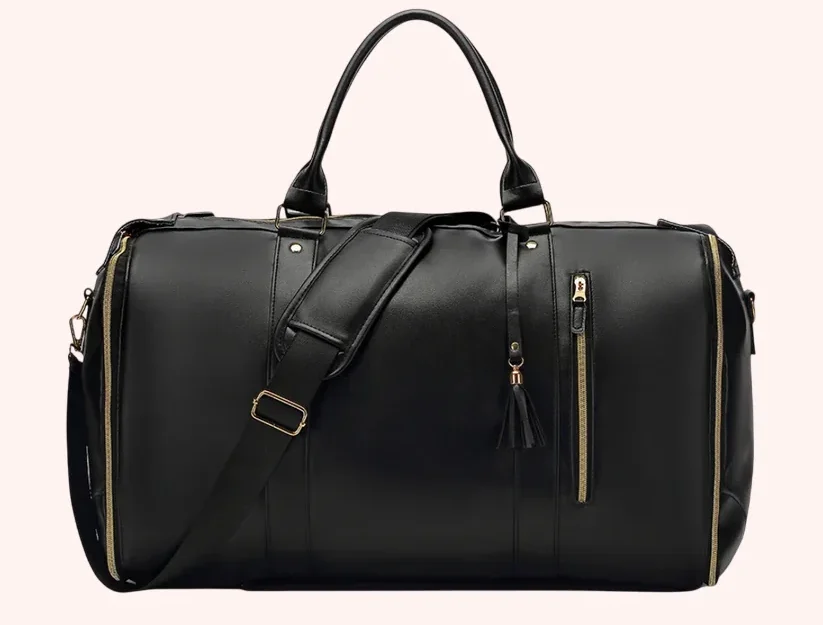
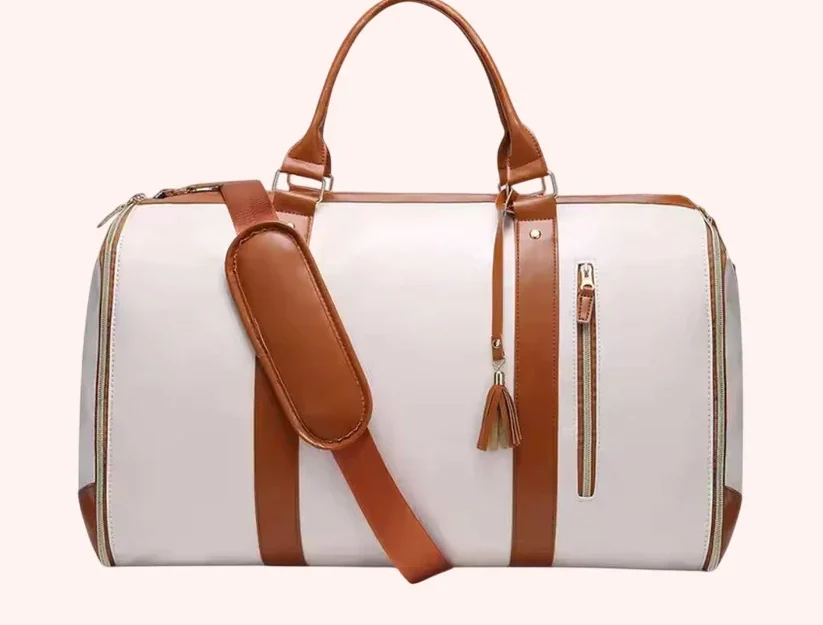
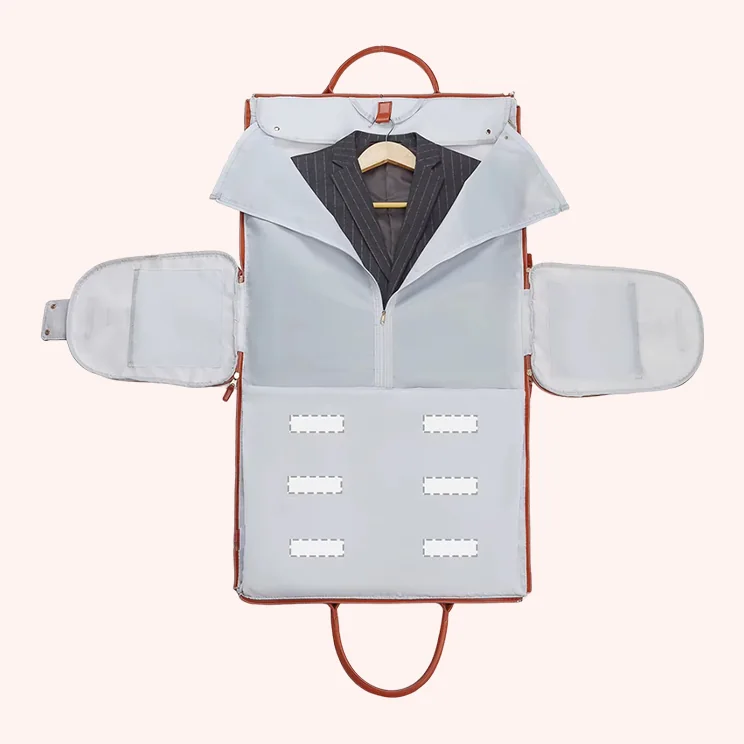
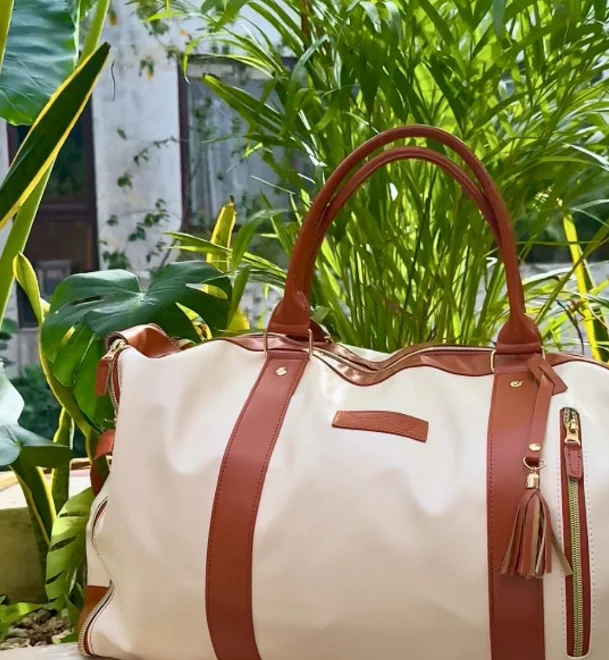
- Garment duffel. Opens flat to hang one outfit, then the sides fold in and it zips into a duffel shape, with the rest of your clothes packed around the suit.
Whichever type you own, pack it once at home before the trip and carry it around the room. You will see where the clothes bend, how heavy it gets and whether it still looks like it fits your airline’s limits.
How to carry a suit bag through the airport
Once the bag is packed, the way you carry it matters as much as the way you filled it.
- Fold it once and carry it by the handle, or over your shoulder if it has a strap. Keep it upright so the clothes do not slide.
- At security, send it through flat. The TSA allows coat hangers in carry-on bags, so the hanger can stay inside.
- Board as early as you can. A suit bag needs a flat spot on top of the other bags in the overhead bin.
- Lay it flat, folded side down. Ask that nothing heavy go on top of it.
- Ask about a closet, but do not count on it. Some aircraft have a small coat closet. Space is limited and crew decide.
On most US airlines, a garment bag counts as your carry-on, not your personal item. American Airlines, for example, allows a soft-sided garment bag up to 51 in (130 cm) in total dimensions in place of a carry-on (checked November 2026). Read does a garment bag count as a carry-on for other airlines.

How to use a garment bag that is also a duffel
A garment duffel works like a garment bag on the inside and a duffel on the outside. It solves the main problem with a classic suit bag: it holds the suit but little else, so you end up with two bags.
The PristineBag Travel Duffel works this way:
- Open the bag flat.
- Hang one suit or one dress in the garment section, on its hanger and in its dry-cleaning bag.
- Smooth it, fold the sides in and zip.
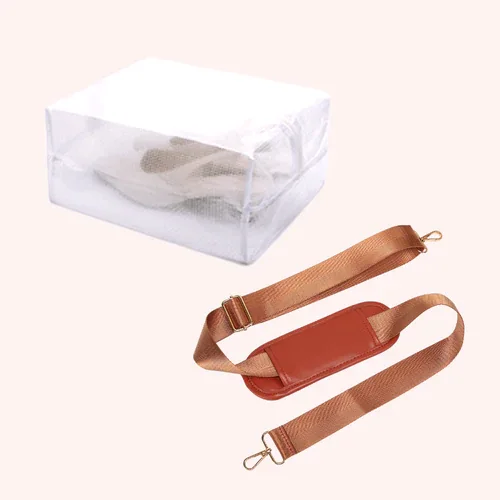
- Put shoes in the separate shoe compartment.
- Pack shirts, underwear and the clear toiletry pouch in the main compartment, and your phone and passport in the front pocket.
It holds one hanging outfit, not three, so it suits a wedding weekend or a short work trip better than a week of meetings in different suits. Packed full, it measures 20.5 × 12.5 × 10 in (52 × 32 × 25 cm), about 1 in deeper than the 9 in most US airlines allow, while Southwest’s 24 × 16 × 10 in limit takes it on paper. We have not measured how much it compresses when packed lighter, so check your airline in our carry-on size guide.
Unpacking: what to do when you arrive
- Open the bag first. Take the suit out and hang it on its hanger before you unpack anything else.
- Remove the plastic. Let the fabric breathe and hang freely.
- Use shower steam. Hang the suit in the bathroom, away from the spray, while you shower. Woolmark notes that steam from a steamy bathroom removes wrinkles from wool.
- Steam what is left with a handheld steamer held a little away from the cloth, or ask the hotel for one.
- Air the bag. Leave the bag open for a few hours so it dries out before you pack it again.
Mistakes to avoid when you use a garment bag
- Wire hangers. They let the shoulders collapse and leave dents.
- Shoes at the fold. The heaviest items press into the suit right where it bends.
- Overpacking. A stuffed suit bag creases more, not less, and may fail the airline sizer.
- Folding in new places. Fold the bag along its own seams, where the design expects it.
- Leaving it folded overnight. Creases set the longer the bag stays closed.
Questions about using a garment bag
How do you use a suit bag on a plane?
Fold it once, carry it on, and lay it flat on top of the other bags in the overhead bin. It usually counts as your carry-on, so pair it with a personal item such as a backpack.
Should the dry-cleaning bag go inside the garment bag?
Yes. Keep the suit in its thin plastic cover inside the outer bag. The plastic reduces friction where the clothes fold. Take it off when you unpack.
How many suits fit in a garment bag?
Many classic garment bags take two or three suits on nested hangers. A garment duffel such as ours holds one suit or one dress in the garment section, with room for other clothes in the main compartment.
Can I put shoes in a garment bag?
Yes, in a shoe pocket or a separate compartment, in shoe bags, and away from the fold. Never put them loose on top of the suit.
How do you fold a garment bag?
Along its own seams, in half or in thirds depending on the design, with a soft roll at each fold. Do not press the folds flat.
Keep reading
More on suits and garment bags