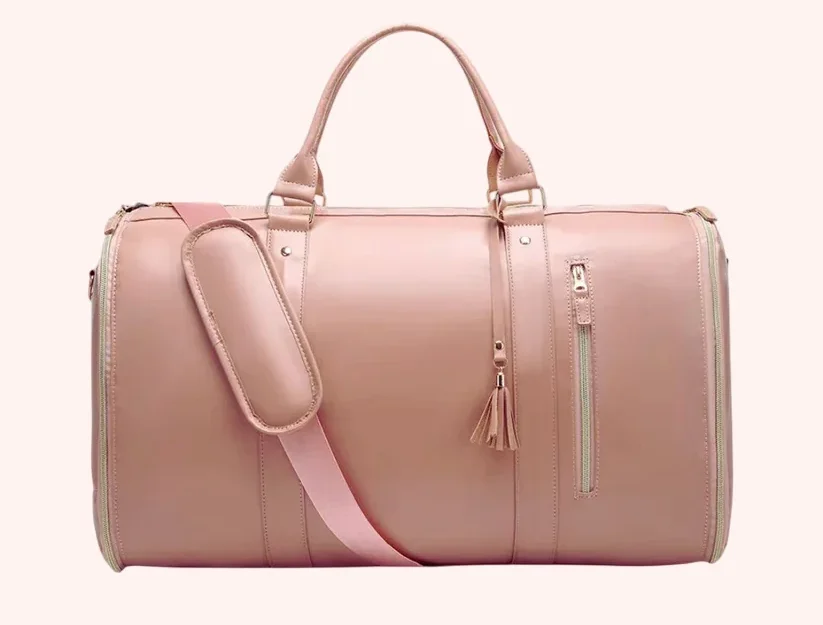
How to stop faux leather peeling (and fix it)
Why the polyurethane coating on faux leather lifts, how to remove flakes, seal and recolor a small area, when repair is not worth it, and the habits that keep it from peeling.
Peeling faux leather happens when the thin polyurethane top layer loses its grip on the fabric underneath, usually because moisture, heat and light have slowly broken the coating down. You cannot make the original surface whole again. You can stop the damage spreading and hide small areas: clean the spot, remove loose flakes, seal the edges and recolor with a flexible repair compound. Prevention is easier, and it comes down to keeping faux leather clean, dry, cool and out of the sun.
This guide explains why the coating fails, how to repair peeling pleather on a bag step by step, when a repair is not worth it, and the habits that keep faux leather from peeling in the first place.

Why faux leather peels
Most faux leather, also called PU leather, vegan leather or pleather, is built in layers. A 2021 study in the journal Coatings describes the usual structure: a textile backing, a foamed middle layer, a compact layer and a thin topcoat. Peeling is the top layers separating from the ones below.
Moisture and hydrolysis
Polyurethane slowly reacts with water in a process called hydrolysis, which breaks the polymer apart. The Fashion Museum Antwerp’s damage atlas for polyurethanes describes the result as flaking: cracking plus loss of adhesion of the coating, caused by hydrolysis. It also notes that ester-based polyurethanes are more sensitive to hydrolysis, while ether-based ones resist it better.
This is why a faux leather bag stored for months in a humid basement can peel without ever being used. Time and damp air do the damage, not rain on one trip.
Heat and sunlight
Heat speeds up the same aging, and the museum atlas lists light as a main cause of polymer damage. A bag left in a hot car trunk, by a radiator or on a sunny windowsill ages faster than one kept in a cool closet.
Flexing and rubbing
Peeling faux leather usually starts where the material bends and rubs most: handles, strap anchors, zip ends, piping and the corners of the base. Once a crack opens there, moisture and dirt get under the edge and the flake grows.
Solvents and dry cleaning
Strong chemicals attack faux leather coatings directly. The Drycleaning & Laundry Institute warns that polyurethane coatings can separate from the fabric after dry cleaning and that there is no way to restore them. Nail polish remover, alcohol-heavy products and solvent spot removers are risks too.
Coating quality
Two faux leather bags can look the same in a shop and age very differently. Coating thickness, the chemistry of the polyurethane and how well it bonds to the backing all matter, and none of it is visible at the counter.
Can you stop faux leather peeling once it starts?
You can slow it a lot, but you cannot reverse it. The flakes that have lifted will not bond back to look like the original surface. What you can do is remove what is loose, seal the edges so they stop lifting, and change the conditions that caused it.
- Move the bag to a cool, dry place with steady temperature.
- Stop using any solvent or alcohol-based cleaner on it.
- Clean it only with a damp cloth and a drop of mild soap.
- Avoid bending the damaged area hard, for example by overstuffing the bag.
How to fix peeling faux leather on a bag
This is the usual way to repair peeling pleather and PU on a small area. A careful repair can look fine from a normal distance, but you may still see it up close. Test every product on a hidden spot first.
- Clean the area. Wipe it with a damp cloth and a drop of mild soap, then with plain water. Let it dry completely.
- Remove loose flakes. Press a piece of masking tape onto the area and lift it off, or pick flakes away gently with your fingers. Do not tear at areas that are still firmly attached.
- Trim ragged edges. Use small, sharp scissors to cut lifted edges flush, so there is nothing for a sleeve or strap to catch.
- Smooth the edge. If the step between the coating and the bare fabric is sharp, rub it very lightly with fine sandpaper. Test this first, and stop as soon as it feels smooth.
- Fill and recolor. Apply a flexible repair compound or paint made for vinyl and faux leather in thin layers. Let each layer dry as the product says before adding the next.
- Seal it. Many repair kits include a top finish. It helps protect the repair and match the shine of the surrounding surface.
- Let it cure. Give it the full curing time on the label before you use the bag, and avoid bending the repaired area for the first days.
Color match is the hard part when you repair peeling pleather. Take the bag with you when you choose a color, or buy a kit with mixable tints and test on the base or under a strap.
Other ways to fix peeling pleather
Patches and covers
A leather or fabric patch, stitched or glued over a worn corner, can look intentional if it is placed symmetrically, for example on all four base corners. It is a practical fix for bags that see hard use.
Professional repair
A bag repair shop or cobbler can re-cover handles, replace piping and patch worn panels. Ask for a quote before you commit, because labor can cost more than the bag is worth.
Replace the part
Peeling shoulder straps and handle wraps are often easier to replace than to repair. A detachable strap can usually be swapped for a new one.
Ask the seller
If the bag is new and the coating peels early, contact the seller. Return and warranty terms differ by brand, so check them before you try a repair that might void a claim.
When repair is not worth it
Repair works on small, isolated spots. It is usually not worth it when:
- Large areas are flaking, so you would be repainting most of the bag.
- The handles or strap anchors are peeling and the fabric under them is tearing. That is a strength problem, not a looks problem.
- The surface is sticky all over, which suggests the coating is breaking down throughout.
- The cost of a pro repair is close to the price of a new bag.
Does the same fix work on jackets, sofas and car seats?
The cause is the same on any polyurethane-coated item, so the same principles apply. How well a repair holds depends on how much the spot bends and rubs.
- Jackets: peeling faux leather on jackets often shows at the collar, cuffs and elbows. Do not send a coated jacket to the dry cleaner unless the label clearly allows it. The Drycleaning & Laundry Institute’s warning about coatings separating is written about outerwear.
- Sofas and chairs: repairs on seat cushions wear off quickly because they are sat on daily. A fitted cover or re-upholstery is often the lasting fix.
- Car seats: sun through the windows and summer heat age the surface. A windshield sunshade and seat covers slow it down.
- Shoes: the toe crease flexes with every step, so paint there tends to crack again. A cobbler can advise whether a repair is worth it.
How to keep faux leather from peeling
The causes of faux leather peeling are slow, so the fixes are habits. These steps target each one:
- Store it cool and dry. A bedroom closet beats an attic, garage, basement or car trunk.
- Use a breathable dust bag. A sealed plastic bag can trap moisture against the coating.
- Dry it before storage. After rain, open every zip and let the bag dry at room temperature.
- Keep it out of the sun. Do not leave it on windowsills or a car’s back shelf.
- Never use direct heat. No hair dryers, radiators or heaters to dry it.
- Clean it gently. A damp cloth and a drop of mild soap, then plain water. Our guide on how to clean a faux leather bag covers stains too.
- Keep chemicals in a pouch. Perfume, hand sanitizer and nail polish remover should never touch the surface.
- No washing machine or dry cleaning. Both are hard on polyurethane coatings.
- Do not overstuff it. Constant strain on seams and handles makes the coating flex and crack sooner.
- Stuff it lightly for storage. A towel or tissue paper inside stops hard creases from forming.
For a fuller look at what shortens the life of coated materials and how long they last, read our guide to vegan leather durability.
How to choose faux leather that resists peeling
You cannot test a faux leather coating in a shop, but you can ask better questions. Testing labs such as SATRA have a method, TM344, that ages polyurethane in a warm, humid environment and then checks flex cracking and coating adhesion. A maker that has tested for hydrolysis can tell you so.
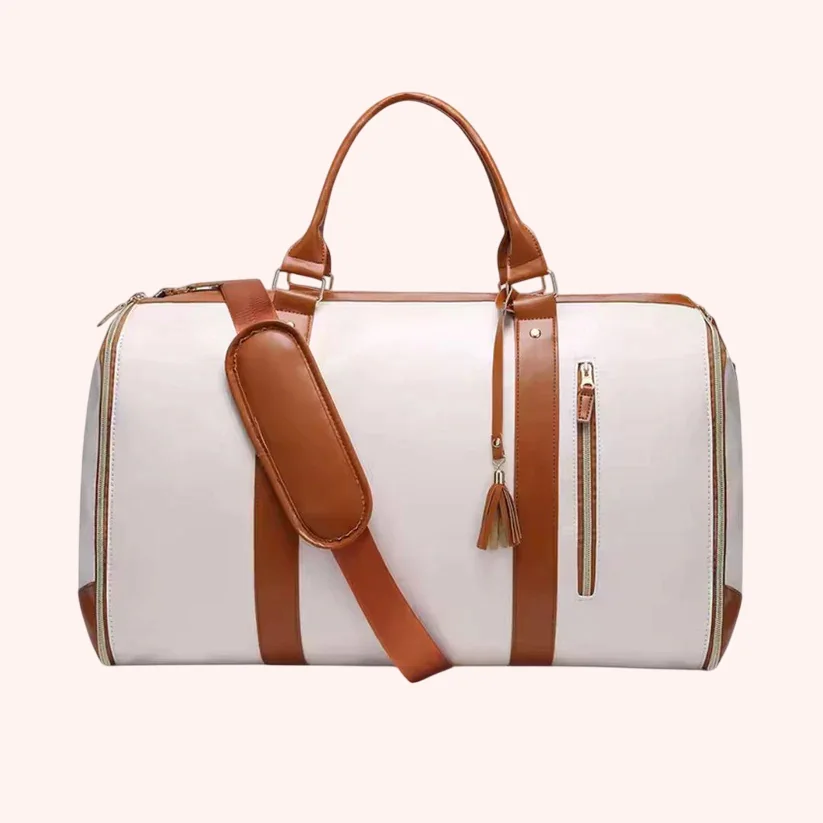
Look at the build too. Edges that are folded or sealed, reinforced corners, and handles anchored with wide stitching all reduce the stress points where peeling starts. If you are weighing materials, our comparison of PU leather vs real leather and our roundup of leather and vegan leather weekender bags may help.
What about our bag?
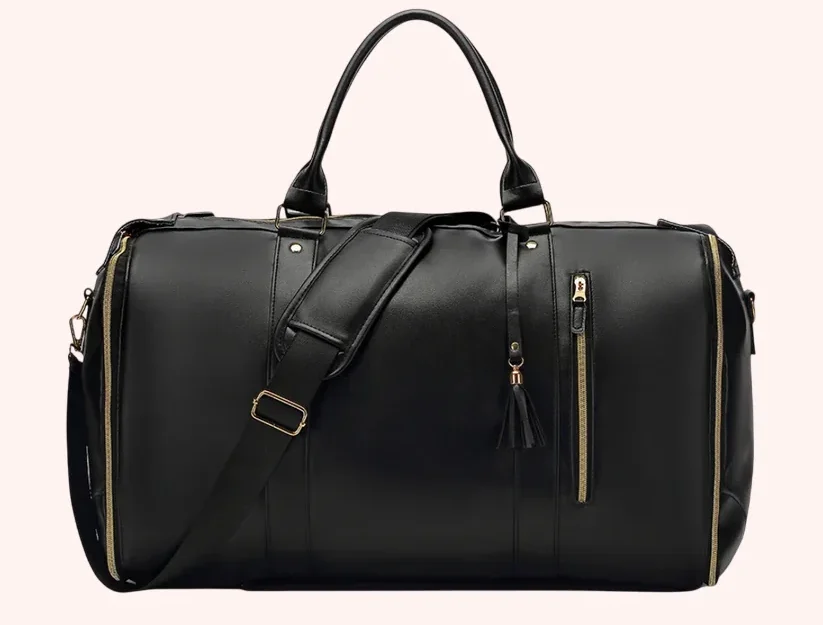
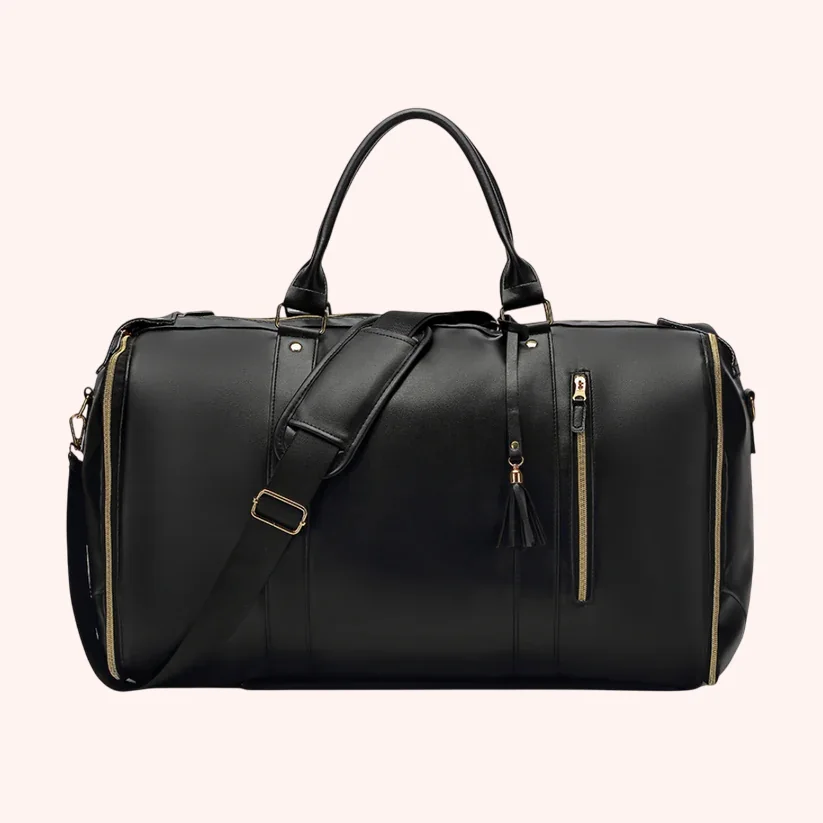
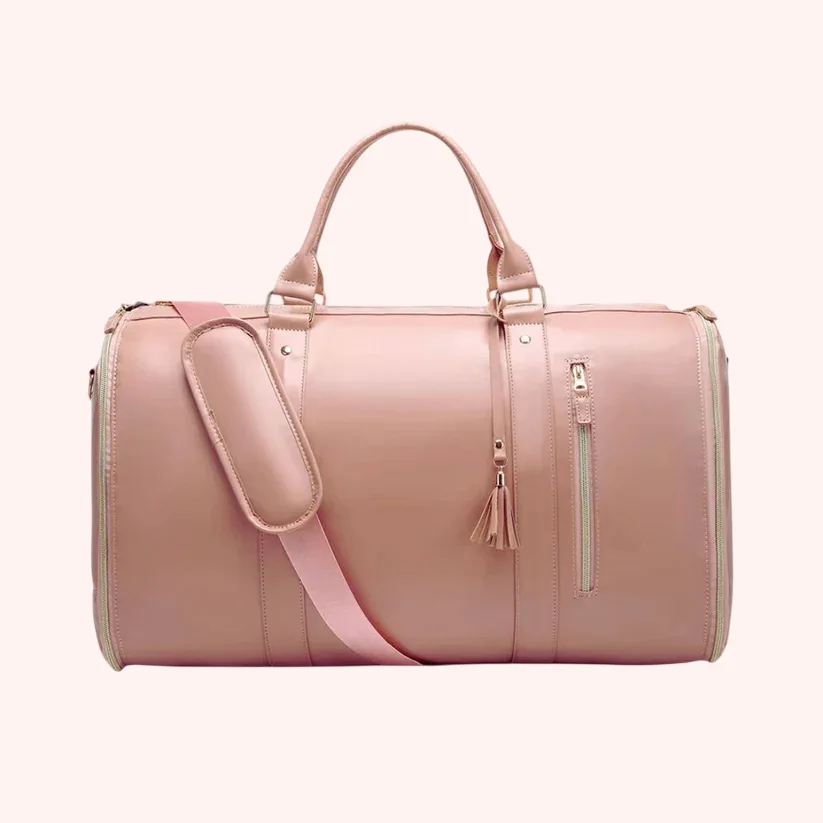
The PristineBag Travel Duffel has a water-resistant PU finish with a vegan leather look. It is not waterproof. We have not run long-term aging tests on it, so we make no claim either way about whether or when it might peel. Like any polyurethane surface, it lasts longest with the habits above.
Our care advice is simple: wipe it with a damp cloth, let it air dry and keep it out of the washing machine. The design also helps with wear. Shoes ride in their own compartment instead of rubbing the lining, a suit or dress hangs in the garment section, and the trolley sleeve lets the bag sit on a suitcase handle instead of the floor.
If something is wrong with your bag, our returns and refund page explains what to do. More care guides are on our bag care hub.
Peeling faux leather: common questions
Why is my faux leather peeling?
Faux leather usually peels because its polyurethane coating has broken down over time from moisture, heat and light, and lost its grip on the fabric underneath. Flexing at handles and corners, and harsh cleaners, speed it up.
Can you glue peeling faux leather back down?
Not in a way that lasts or looks right. On peeling faux leather, the lifted coating is already degraded, so glue rarely holds it flat for long. Removing the loose flakes and recoloring the area gives a better result.
Does clear nail polish stop faux leather peeling?
It is sometimes suggested as a quick sealant, but nail polish contains solvents that can attack the coating around the spot. A repair finish made for vinyl and faux leather is the safer choice.
How long does it take for faux leather to peel?
There is no fixed time for faux leather. It depends on the coating quality and how the item is used and stored. Cool, dry storage away from sunlight helps it last longer.
Keep reading
More on bag care and materials