How to fold a suit jacket or blazer for travel
Turn one shoulder inside out, tuck the other into it, fold once. The reverse shoulder fold step by step, the roll for softer blazers, and how to get the creases out when you land.
To fold a suit jacket for travel, use the reverse shoulder fold: turn one shoulder inside out, tuck the other shoulder into it, straighten the sleeves inside, then fold the jacket once at the waist with a dry-cleaning bag in the fold. The lining ends up on the outside, so the outer fabric, lapels and sleeves stay protected. The same method works for a blazer or a sport coat, in a carry-on, a suitcase or a backpack.
Below are the exact steps, the roll method for softer jackets, which fold suits which kind of jacket, where to put the folded jacket in your bag, and how to get it back in shape at the other end.
Before you fold a suit jacket
A good fold starts with a good jacket. Creases set fastest in fabric that is still warm or damp, so prepare it first.
- Clean and pressed. If you just steamed it, let it cool and dry on a hanger before folding.
- Pockets empty. Take out the pocket square, pens, cards and phone. Anything left inside prints its outline into the cloth.
- Pins off. Remove lapel pins and boutonnieres.
- A flat surface. A bed or a clean table, with room for the jacket at full width.
- A dry-cleaning bag or tissue paper. Thin plastic or tissue inside the fold lets the fabric slide instead of creasing.
Check the care label too. Under the FTC’s care labeling rule, a label has to warn you if steam or ironing would damage the jacket, which matters when you try to remove creases later.
How to fold a suit jacket with the reverse shoulder fold
This is the standard method for travel. It folds the jacket in half lengthwise with the lining outside, so any crease lands on the lining first and the shoulders keep their shape.
- Hold the suit jacket by the shoulders, with the front facing you.
- Turn one shoulder inside out. Push the shoulder point back through itself, so the lining shows on the outside. The sleeve on that side drops inside the jacket.
- Tuck the other shoulder into it. Slide the second shoulder into the inverted one until the two shoulder seams sit inside each other, like two cupped hands.
- Lay the jacket flat. It is now folded in half lengthwise, lining out, with both sleeves inside.
- Straighten everything. Smooth the sleeves so they lie flat inside, and line up the collar, the lapels and the hem.
- Add the plastic. Slide the folded jacket into a dry-cleaning bag, or lay a sheet of tissue across the middle.
- Fold once at the waist. Fold the jacket in half across the middle, over the plastic or tissue, without pressing the fold flat. If your bag is long enough, skip this fold and pack it at full length.
The result is a long, narrow package, padded at the shoulders and with only one soft bend. That is the whole method.
Why the reverse shoulder fold works
Folding a jacket straight across the back, the way you might fold a sweater, crushes the shoulder pads and puts a hard line across the back and the lapels. The reverse fold keeps the shoulders nested in their natural curve, keeps the lapels on the inside, and moves the inevitable crease to the lining, where nobody sees it.
The roll method for a blazer or sport coat
Rolling avoids a flat fold altogether, which suits softer jackets. It starts the same way as the reverse shoulder fold.
- Do the reverse shoulder fold, steps 1 to 5 above.
- Lay a dry-cleaning bag or tissue over the folded jacket.
- Place a soft core, such as a rolled T-shirt, at the collar end.
- Roll the jacket loosely from the collar toward the hem, around the core.
- Pack the roll where nothing heavy will sit on it.
The roll works well for an unstructured sport coat, a knit blazer or a soft cotton jacket. It is less kind to a structured suit jacket with padded shoulders, which can bend out of shape if the roll is tight. For those, stick with one soft fold.
Which fold for which jacket
| Jacket | Shoulders | Best method |
|---|---|---|
| Structured suit jacket | Padded, firm | Reverse shoulder fold plus one soft fold, or hang it |
| Soft-shouldered blazer | Light or no padding | Reverse shoulder fold, then a loose roll |
| Unstructured sport coat | No padding | Roll it |
| Linen jacket | Any | Hang it if you can, otherwise fold loosely with tissue |
| Tuxedo jacket | Usually padded | Hang it; if you must fold, put tissue over the satin lapels |
How to fold a blazer for travel in a backpack
A backpack is the hardest place for a blazer, because there is no flat bottom and the bag gets squeezed under seats. A blazer for travel in a backpack should be reverse-folded, then rolled loosely around a soft core of T-shirts.
- Pack the roll in the main compartment, against the back panel, where the bag is flattest.
- Keep laptops, chargers and shoes away from it.
- Do not stuff the backpack under the seat with the blazer inside. Put it in the overhead bin if you can.
Where the folded jacket goes in your bag
The fold is only half the job. Where you put the jacket decides how much weight it carries for the trip.
- Heavy things first. Shoes in bags and a toiletry kit go at the bottom, at the wheel end of a suitcase.
- A flat bed. Soft clothes such as T-shirts and knitwear make a level surface.
- Trousers and shirts next. Our guide to folding dress shirts for travel shows how to keep collars sharp.
- The jacket last. Lay it on top, in its plastic, so it comes out first and nothing presses on it.
- Fill the gaps. Socks and belts in the corners stop the load from shifting.
The TSA suggests you pack your bag in neat layers to make screening easier, which suits this method well. For the trousers and the rest of the suit, see our full guide on how to pack a suit in a carry-on or suitcase.
Fabric changes how gently to fold
Wool jackets forgive a fold best, because wool responds well to steam. Linen and cotton jackets crease faster and hold the lines longer, so fold them as loosely as you can or hang them. Velvet and satin lapels mark under pressure, so wrap them in tissue and pack them on top.
Whatever the cloth, a dry-cleaning bag inside the fold does more than any clever folding trick. It costs almost nothing, and you can use it again on the way home.
Carry-on, suitcase or weekender: adjust the last fold
The reverse shoulder fold stays the same in any bag. What changes is the last step, because each bag has a different length.
- Carry-on. Most carry-ons are too short for a suit jacket at full length, so make the one soft fold at the waist, with plastic inside, and pack it on top.
- Large suitcase. If the case is long enough, lay the reverse-folded suit jacket flat at full length and skip the waist fold. One fewer fold means one fewer line to steam out.
- Weekender or duffel. A duffel has no flat frame, so roll a soft jacket or fold a structured one at the waist and pack it on top of a flat layer of clothes.
Packing two jackets
On a longer trip you may bring a suit jacket and a separate blazer. Do the reverse shoulder fold on each one, put each in its own dry-cleaning bag, and stack them with the collars at opposite ends so the pile stays level. Pack the jacket you need first on top.
Two structured jackets take a lot of room in a carry-on. If space is tight, wear one on the plane and pack the other, or hang one in a garment bag and fold the second.
Or skip the fold: hang the jacket instead
Any fold leaves some trace, however careful. If the suit jacket has to look its best, for a wedding, an interview or a presentation, hanging it is the lower-risk option.
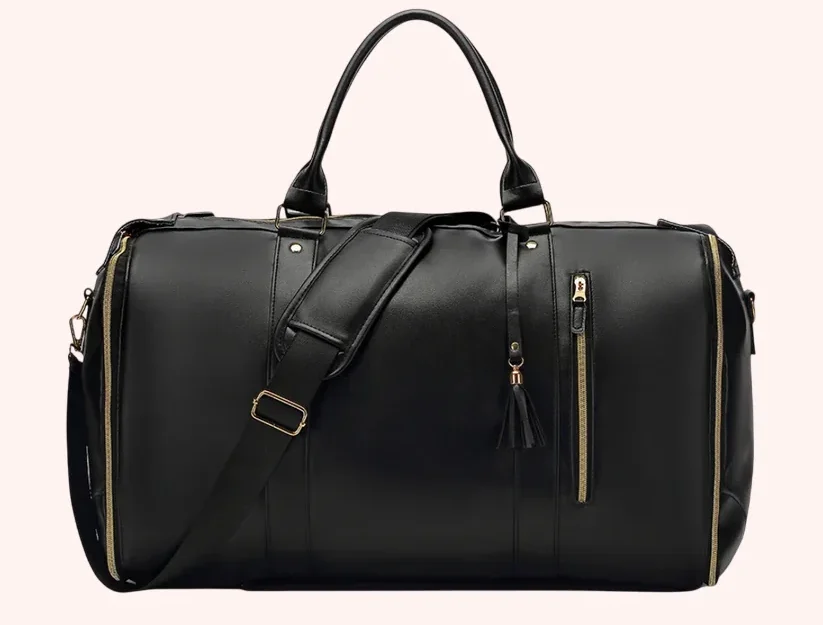
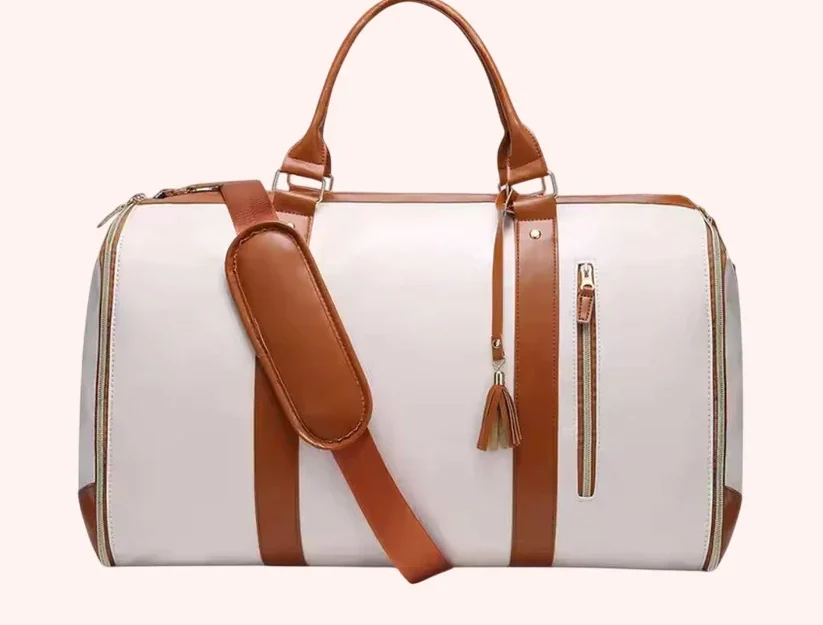
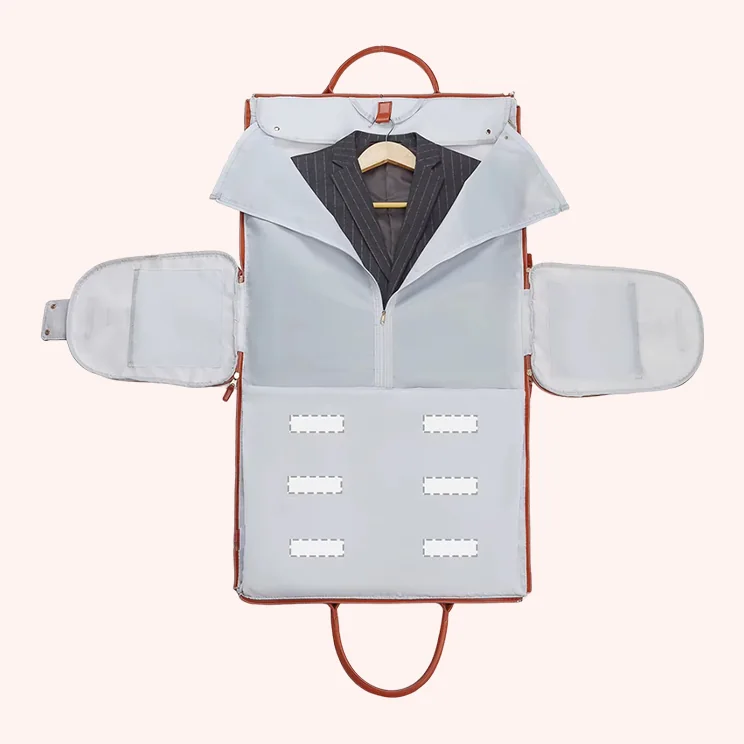
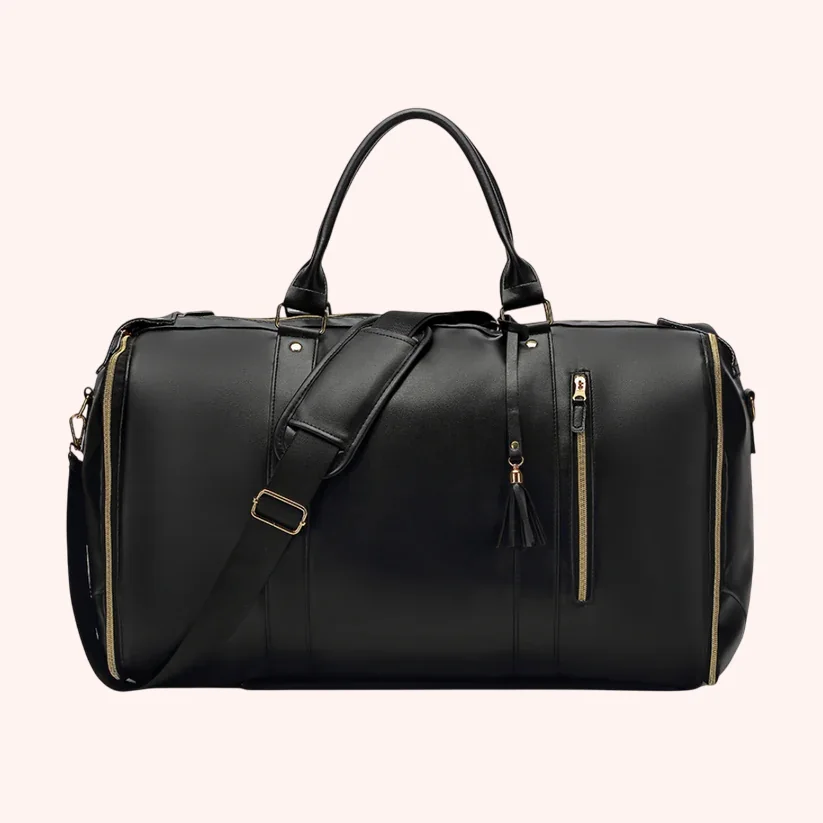
The PristineBag Travel Duffel opens flat into a garment bag: you hang one suit or one dress in the garment section, fold the sides in and zip. The jacket travels on its hanger, shoes go in a separate shoe compartment, and the rest of your clothes go in the main compartment. The suit still bends where the bag folds, but it needs no reverse shoulder fold.
The honest catch is depth. Packed full, the bag is 20.5 × 12.5 × 10 in (52 × 32 × 25 cm), about 1 in over the 9 in depth most US airlines allow, while Southwest’s 24 × 16 × 10 in limit takes it on paper. A soft bag packed lighter gets thinner, but we have not measured how much, so check your airline in our carry-on size guide first.

How to get creases out of a suit jacket
- Unfold it as soon as you arrive. The longer it stays folded, the deeper the lines set.
- Hang it on a shaped hanger. The Woolmark Company recommends shaped or padded hangers for woven wool. A thin hanger lets the shoulders sag.
- Use shower steam. Hang the jacket in the bathroom, away from the spray, while you take a hot shower. Woolmark notes that steam from a steamy bathroom removes wrinkles from wool.
- Let it dry in open air, overnight if you can.
- Steam what is left. Hold a handheld steamer a little away from the fabric. Woolmark advises always using steam when pressing wool, and a pressing cloth between an iron and the jacket if you use one.
- Leave the lapels alone. Steam them lightly, but do not press the roll of the lapel flat.
Common mistakes when folding a jacket
- Folding straight across the back. It crushes the shoulders and creases the lapels.
- Folding into quarters. Every extra fold is another line to steam out.
- Pressing the fold flat. Let the fold stay soft and rounded.
- Rolling a structured jacket tightly. Padded shoulders can bend out of shape.
- Packing it under shoes. Weight is what turns a soft fold into a hard crease.

Questions about folding a suit jacket
Can you fold a suit jacket without creasing it?
Not completely, but the reverse shoulder fold with a dry-cleaning bag inside keeps creases soft and on the lining. Hang the jacket as soon as you arrive and most of them drop out.
Is it better to roll or fold a blazer for travel?
Roll an unstructured blazer or sport coat after the reverse shoulder fold. Fold a structured jacket with padded shoulders once at the waist instead.
How do you fold a sport coat?
The same way as a suit jacket: reverse shoulder fold, sleeves inside, then one soft fold or a loose roll. Many sport coats are softer than suit jackets, so the roll usually works well.
Should I wear my suit jacket on the plane?
It saves space, but sitting for hours creases the back. On a short flight it is fine. On a long one, fold it lining-out and lay it on top in the overhead bin. Our guide on how to travel with a suit compares the options.
How do you pack a blazer in a suitcase?
Reverse-fold it, put it in a dry-cleaning bag, and lay it on top of a flat bed of soft clothes, last in and first out.
Keep reading
More on suits and garment bags