How to fold dress shirts for travel
The classic fold, the roll and the bundle, step by step. Which method suits which shirt, how to keep collars sharp, and how to get shirts crisp again in a hotel room.
To fold dress shirts for travel, button the shirt, lay it face down, fold each side and sleeve back so the shirt is the width of your bag, then fold the tail up twice with tissue or a dry-cleaning bag inside each fold. Stack the shirts with the collars at alternate ends, on top of a flat layer of clothes. Rolling is faster for casual and non-iron shirts, and the bundle method creases least when you pack several shirts with a suit.
Below are all three methods step by step, which one to use for which dress shirt, how to protect the collar, where shirts go in a suitcase or carry-on, and how to get them crisp again in a hotel room.
Before you fold: prepare each dress shirt
A dress shirt packs best when it starts smooth and cool. A few minutes of preparation saves a lot of steaming later.
- Start pressed. Iron or steam the shirt, then let it cool on a hanger. Warm, slightly damp cotton sets creases fast.
- Button it. Do up the top button and every second button below it, so the front stays aligned while you fold.
- Keep the collar stays in. They help the collar points stay flat and straight.
- Have plastic or tissue ready. Dry-cleaning bags or tissue paper inside the folds let the cotton slide instead of creasing.
- Clear a flat surface. A bed works, but a table gives sharper, more even folds.
Check the care label before you plan to iron at the other end. Under the FTC’s care labeling rule, a label has to say so if ironing or steam would damage the shirt.
Method 1: the classic fold
This is close to how shops fold new shirts, and it is the best way to fold dress shirts for a suitcase. It gives a flat rectangle that stacks neatly and keeps the collar and front placket smooth.
- Lay the shirt face down on a flat surface and smooth it from the center out.
- Fold one side back. From the middle of the shoulder, fold the side of the shirt toward the center, straight down to the tail.
- Fold the sleeve down. Lay the sleeve along the folded side, pointing straight down. If it is longer than the shirt, fold the cuff back up.
- Repeat on the other side. You now have a long rectangle about the width of the collar plus a few inches.
- Add the plastic. Lay a dry-cleaning bag or a sheet of tissue over the back.
- Fold the tail up. Fold the bottom up by about a third, then fold again just below the collar. In a larger case, one fold may be enough.
- Turn it over. The collar sits on top, and the front of the shirt is smooth.
For even folds every time, use a piece of stiff card the size of the finished shirt as a template. Lay it on the back of the shirt before you fold the sides, then slide it out at the end.
Method 2: the roll
Rolling saves space and avoids flat creases, because the fabric curves around itself instead of folding. It suits casual cotton shirts, oxford cloth, non-iron shirts and anything you will steam anyway.
- Button the shirt and lay it face down.
- Fold the sleeves in along the sides, as in the classic fold.
- Fold the shirt in half lengthwise, so the sides meet.
- Starting at the tail, roll it firmly but without squeezing, up toward the collar.
- Leave the collar on the outside of the roll, so it is not crushed in the middle.
Pack rolled shirts side by side in a row, like logs, in a layer of their own. The roll is quicker than the classic fold, but a crisp poplin or twill dress shirt may still show soft curved lines when you unroll it.
Method 3: the bundle
The bundle wraps clothes around a soft core, so nothing gets a sharp fold. It takes longer, but it is the best way to pack several dress shirts together with a suit jacket or trousers.
- Make a core: a pouch or packing cube filled with underwear and socks.
- Lay the first dress shirt face down and unfolded across your bag or bed.
- Lay the next shirt on top, facing the opposite direction, with the collar at the other end.
- Repeat with every shirt, then lay trousers or a jacket over the top if you are bringing them.
- Put the core in the middle and wrap each layer around it in turn, from the top layer down, smoothing as you go.
The downside is access. To reach the shirt in the middle, you unwrap everything on top of it. It suits a trip where you unpack once into a hotel closet.
Which method to use
| Method | Best for | Space | Crease risk |
|---|---|---|---|
| Classic fold | Crisp dress shirts in a suitcase | Medium | Low to medium, two soft folds |
| Roll | Casual, oxford and non-iron shirts | Least | Medium, soft curves |
| Bundle | Several shirts plus a suit | Medium | Lowest |
| Hang in a garment bag | One or two shirts with a suit | Depends on the bag | Lowest |
How to fold a button-down shirt for travel
A button-down shirt, with buttons on the collar points, is usually more casual than a spread or point collar dress shirt. Fasten the collar buttons before you fold, so the points cannot bend. An oxford button-down shirt rolls well, so the roll is often the easiest choice. If you want it crisp, use the classic fold.
Protect the collar
The collar is the first thing people see and the part most easily crushed. A few habits keep it sharp.
- Alternate collars. Stack folded dress shirts with the collars at opposite ends, so the pile stays flat and no collar carries the weight of the others.
- Fill the collar. Roll a belt or a pair of socks and tuck it inside the collar to hold its round shape.
- Keep shoes away. Shoes and toiletry kits go at the bottom of the bag, never on top of shirts.
- Do not fold the collar. In every method, the collar stays unfolded.
Where shirts go in a suitcase or carry-on
- Shoes and heavy items at the bottom, at the wheel end of a suitcase, in bags.
- A flat layer of soft clothes, such as T-shirts and knitwear.
- Trousers, folded along the crease.
- Folded dress shirts, collars alternating, or a row of rolled shirts.
- A suit jacket on top, if you bring one, folded with the reverse shoulder fold.
- Socks and belts in the gaps, so nothing can shift.
The TSA suggests you pack your bag in neat layers to help screening, and layers of flat shirts are exactly that. For the jacket, see our guide on how to fold a suit jacket for travel, and for the whole outfit, how to pack a suit in a carry-on or suitcase.
In a carry-on, pack one shirt per day of meetings plus one spare, and wear the bulkiest outfit on the plane. Our guide to packing a carry-on for a week shows how it all fits.
Or hang a shirt with your suit
If you are bringing a suit, the dress shirt you will wear with it can travel on the same hanger. Hang the trousers over the bar, the buttoned shirt over them and the jacket on top, then cover the set with a dry-cleaning bag. The shirt is held flat between the layers instead of folded.
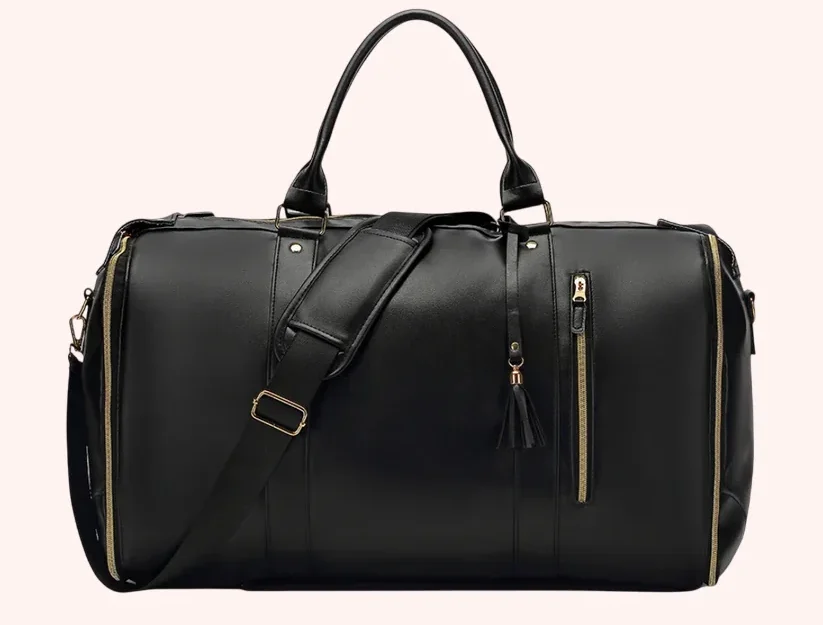
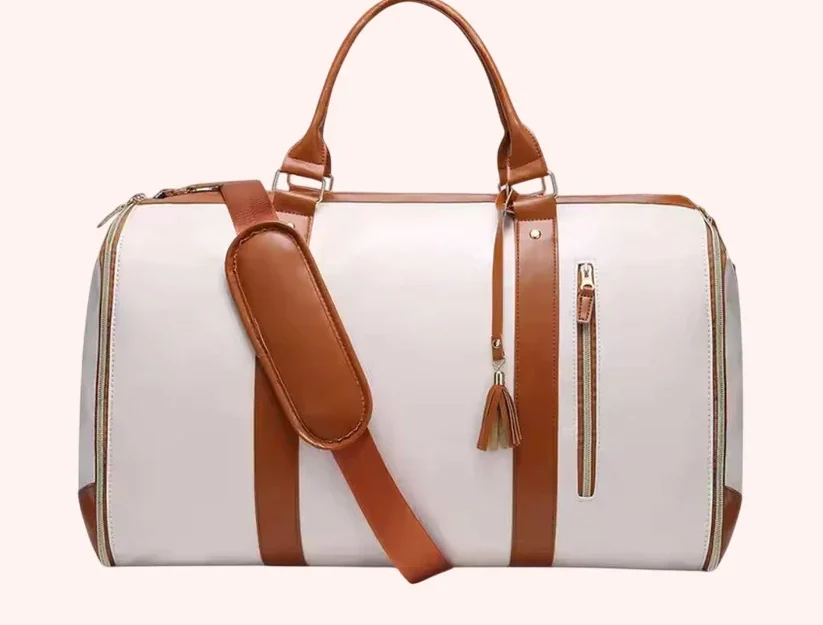
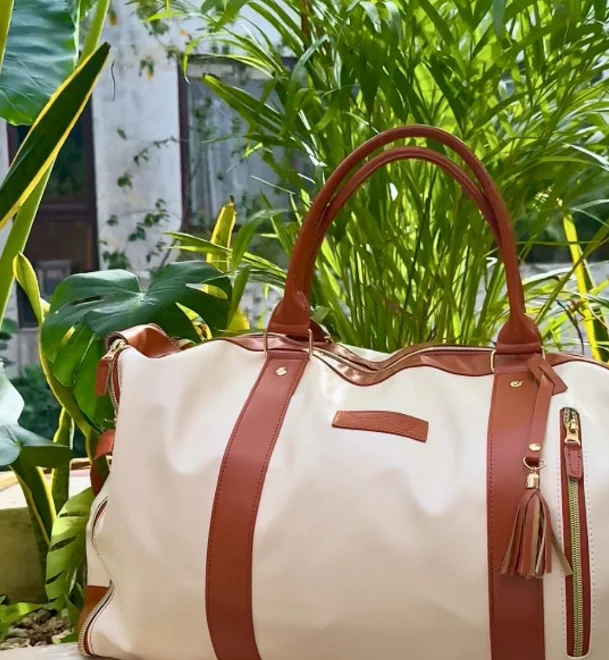
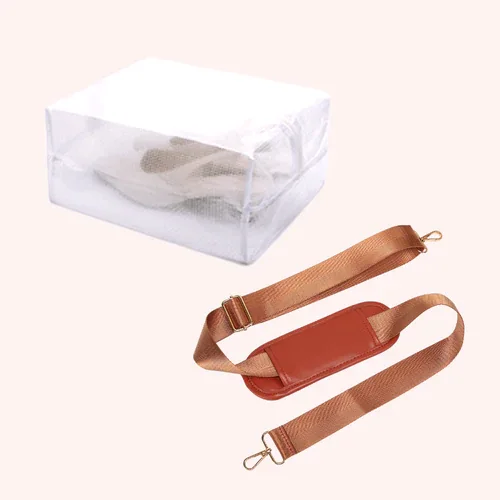
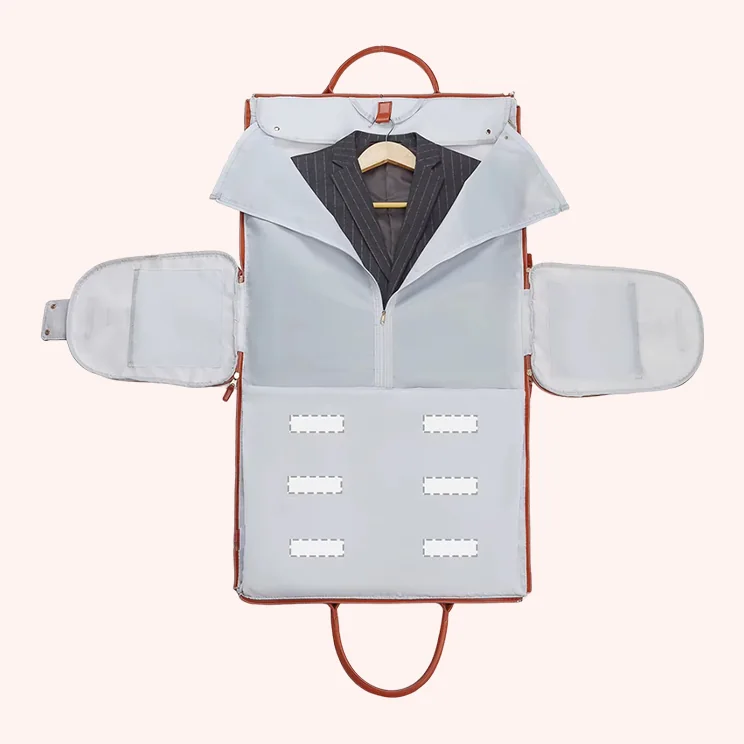
The PristineBag Travel Duffel is built for this. It opens flat so you can hang one suit, with its shirt, in the garment section, fold the sides in and zip. The other shirts go folded or rolled in the main compartment, and shoes go in their own compartment, away from the collars.
Packed full, the bag is 20.5 × 12.5 × 10 in (52 × 32 × 25 cm). That is about 1 in deeper than the 9 in most US airlines allow, while Southwest’s 24 × 16 × 10 in limit takes it on paper. We have not measured how much it compresses when packed lighter, so check our carry-on size guide before you fly.
Packing dress shirts for a business trip
On a work trip, shirts are most of what you pack, so it pays to plan them. Count one dress shirt for each day you need to look formal, add a spare, and pick colors that all work with the one suit or jacket you are bringing. White and light blue go with almost everything.
For three or more shirts, a packing folder helps. It is a flat envelope with a folding board inside: you fold dress shirts around the board, stack them, and close the folder, so the pile stays square in the bag. A packing cube does a similar job for rolled shirts.
On longer trips, do not pack a shirt for every day. Many hotels offer laundry and pressing, and a few pressed shirts from the hotel cost less space than a second bag.
Mistakes that crease dress shirts
- Packing a warm shirt. Let it cool after ironing, or the folds set as it cools.
- Folding the collar. A creased collar is the hardest thing to fix in a hotel room.
- Too many folds. Every fold is another line. Fold dress shirts as few times as your bag allows.
- Shirts at the bottom. Weight is what turns soft folds into hard creases.
- Overstuffing. A bag forced shut presses everything flat for the whole trip.
- Waiting to unpack. Hang the shirts the evening you arrive, not the morning you need them.
Get the creases out on arrival
- Unpack each dress shirt first and hang it, buttoned at the top, so the fabric can relax.
- Use the shower. Hang the shirts in the bathroom, out of reach of the spray, while you take a hot shower.
- Steam or iron what is left. Most cotton shirts take a hot iron, but follow the care label. Start with the collar and cuffs, then the front.
- Use a spray for touch-ups. A travel bottle of wrinkle-release spray in your carry-on has to follow the TSA rule of 3.4 ounces (100 ml) or less per container.

Questions about folding dress shirts
Is it better to roll or fold dress shirts?
Fold crisp dress shirts with the classic fold. Roll casual, oxford and non-iron shirts. For several shirts with a suit, use the bundle method.
How do I keep collars from getting crushed?
Stack shirts with the collars at alternate ends, tuck a rolled belt or socks inside each collar, and keep shoes and heavy items away from the shirts.
Should I pack dress shirts in dry-cleaning bags?
Yes, or use tissue paper. A thin layer inside each fold lets the fabric slide instead of creasing. Take it off when you hang the shirts.
How many dress shirts should I pack?
One per day you need to look formal, plus one spare in case of a spill. On longer trips, plan a hotel laundry or pressing service.
Do non-iron shirts need special folding?
No. They forgive more, so rolling works well. They still look sharper if you hang them as soon as you arrive.
Keep reading
More on suits and garment bags