Personal item vs carry-on: sizes and differences
A personal item fits under the seat, a carry-on goes in the overhead bin. Here are the sizes by airline, what counts as which, and what to pack in each.
The difference in personal item vs carry-on is size and where the bag goes. A personal item is a small bag that fits under the seat in front of you, such as a purse, laptop bag or small backpack, and airlines that publish a limit keep it to about 17 or 18 in long and 8 or 9 in deep. A carry-on is the larger bag that goes in the overhead bin, up to 22 × 14 × 9 in (56 × 35 × 23 cm) at most big US airlines. On a standard fare you get one of each.
The details change by airline and by fare. On some Basic Economy tickets the personal item is the only free bag, and in Europe the under-seat bag can be as small as 40 × 30 × 15 cm. Below are the sizes by airline, checked November 2026, what counts as which, and how to pack each one.
Personal item vs carry-on: the key differences
| Personal item | Carry-on bag | |
|---|---|---|
| Where it goes | Under the seat in front of you | Overhead bin |
| Typical US size | 17 to 18 in long, 8 to 9 in deep, or “must fit under the seat” | 22 × 14 × 9 in, or 24 × 16 × 10 in at Southwest and Frontier |
| Examples | Purse, briefcase, laptop bag, small backpack | Roller bag, duffel, travel backpack, garment bag |
| Cost | Free on almost every fare | Free on most standard US fares, paid on some basic and budget fares |
| If bins are full | Stays with you | May be checked at the gate |
The practical rule: your personal item is the bag you keep within reach for the whole flight, and your carry-on bag is the bigger one you stow overhead. If you can only have one, the under-seat bag is the one that never leaves you.

Personal item sizes by airline (checked November 2026)
We checked these on each airline’s own baggage page in November 2026. Some airlines publish exact dimensions; others only say the bag must fit under the seat. Confirm with your airline before you fly, because limits change.
| Airline | Personal item limit | Source |
|---|---|---|
| American Airlines | 18 × 14 × 8 in (45 × 35 × 20 cm) | aa.com |
| United | 17 × 10 × 9 in (43 × 25 × 22 cm) | united.com |
| JetBlue | 17 × 13 × 8 in | jetblue.com |
| Frontier | 18 × 14 × 8 in | flyfrontier.com |
| Delta | No fixed size; must fit under the seat | delta.com |
| Southwest | No fixed size; goes under the seat | southwest.com |
| Alaska Airlines | No fixed size; a purse, briefcase or laptop bag | alaskaair.com |
| Air Canada | 43 × 33 × 16 cm (17 × 13 × 6 in) | aircanada.com |
| easyJet | 45 × 36 × 20 cm | easyjet.com |
| KLM | 40 × 30 × 15 cm | klm.com |
| Norwegian | 30 × 40 × 20 cm | norwegian.com |
| Ryanair | 40 × 30 × 20 cm | our Ryanair page |
United’s limit is the one to watch in the US. At 17 × 10 × 9 in, it is narrower than American’s or JetBlue’s, so a bag that slides under the seat on one airline can count as a carry-on on another. In Europe, a 40 × 30 × 15 cm limit at KLM is about 16 × 12 × 6 in, smaller than many laptop backpacks.
Carry-on bag sizes for comparison
The carry-on limit is more uniform. American, Delta, United, JetBlue and Alaska all allow 22 × 14 × 9 in including wheels and handles, while Southwest and Frontier allow 24 × 16 × 10 in. In Europe, easyJet’s large cabin bag is 56 × 45 × 25 cm, KLM’s is 55 × 35 × 25 cm and Lufthansa’s is 55 × 40 × 23 cm. Our carry-on size table has 19 airlines, and our guide to what counts as a carry-on covers the rules in full.
To check a bag you already own against these limits, enter its dimensions in the fit checker.
Carry-on check
Will the bag fit your airline?
Pick an airline to compare the bag, packed full, with its cabin bag limit.
Packed full, it is 2.5 cm over American Airlines’s limit. Carry-on limit: 55.9 × 35.6 × 22.9 cm.
What counts as a personal item, and what does not count at all
Airlines list typical examples rather than strict categories. Delta names a purse, briefcase, small backpack, belt bag, camera bag, diaper bag or laptop bag. Southwest lists a purse, briefcase, laptop case, backpack, pillow, blanket or small camera. If it fits under the seat and is within the published size, it counts.
Some things do not count against either allowance. United lets you bring a jacket or coat, an umbrella, reading material, food bought at the airport, mobility devices, a car seat or stroller, a diaper bag and breast pump, and a camera on top of your two bags. American lists diaper bags (one per child), a breast pump, a small cooler of breast milk, child safety seats, strollers and medical or mobility devices.
Watch the one that catches people out: a second small bag. United says small purses or bags are not allowed in addition to your personal item and carry-on, so put the purse inside your tote or backpack before you board.
When the personal item is all you get
Cheaper fares often drop the carry-on and keep only the small bag. That is where the size of your under-seat bag matters most.
- United Basic Economy: only a personal item on most routes. A carry-on is allowed on flights to South America, across the Atlantic or across the Pacific, and for some MileagePlus Premier members and cardholders.
- Frontier: the under-seat bag is included, and the carry-on bag is a paid add-on.
- Air Canada Economy Basic: on some itineraries, tickets bought on or after January 3, 2025, include only one personal item.
- Norwegian LowFare: a small under-seat bag only, with a 10 kg limit. LowFare+ adds an overhead bag.
- easyJet: the under-seat bag of 45 × 36 × 20 cm is the standard; the large cabin bag is booked separately.
If you often fly on these fares, size your under-seat bag to the strictest limits. A bag of 17 × 10 × 8 in or smaller is within the published personal item limits of American, United, JetBlue and Frontier, because it takes United’s narrow width and the 8 in depth the other three allow.
How to measure an under-seat bag
Measure it the way you will carry it: packed, zipped and with the outside pockets full. Soft bags grow as you fill them, and depth is usually the measurement that fails. A tote or backpack that measures 8 in deep empty can bulge past that once a sweater and a laptop are inside.
The space under the seat also varies by aircraft and seat, and rows behind a bulkhead have no seat in front of them at all. KLM, for example, notes that passengers seated near an emergency exit may put their small bag in the overhead bin instead.
Which bags make the best under-seat bag
- A slim backpack keeps your hands free and fits a laptop, but choose one with a flat back so it does not bulge into your legroom.
- A large tote is easy to dig through during the flight and squeezes into tight spaces, though it is harder to carry for long walks.
- A crossbody or belt bag is too small for most trips on its own, but it can go inside your tote at boarding so you stay within two bags.
- A bag with a trolley sleeve slides over your carry-on’s handle, so you roll both through the airport.
Whatever you choose, keep it soft and not overfilled. A soft bag that is not packed solid can give a little under the seat; a rigid case cannot.
Small bag and cabin bag rules outside the US
European airlines tend to use smaller under-seat limits and add weight limits that cover both bags. KLM allows 12 kg for the small bag and hand baggage together in Economy, and Norwegian sets a combined 10 kg on its LowFare+ tickets. Long-haul carriers can be more generous in premium cabins: Emirates allows Business and First Class passengers a briefcase or garment bag on top of the cabin bag, each up to 7 kg.
That means the weight of the bags themselves counts. A light carry-on and a light tote leave more of a combined limit for clothes, which matters more on these airlines than any difference in liters.
How to pack a personal item vs a carry-on
Your personal item holds what you need during the flight and what you cannot afford to lose. Your carry-on holds the bulk of your clothes. If the bins fill and your carry-on bag is checked at the gate, everything important is already under your seat.
In your personal item
- Passport or ID, wallet, phone and keys
- Medication, in its original packaging
- Laptop, chargers and headphones
- Spare lithium batteries and power banks, which the FAA requires to stay in the cabin
- A sweater, snacks and a water bottle (empty through security)
In your carry-on bag
- Clothes, shoes and sleepwear
- Your toiletries, with liquids in a quart-size bag on top
- A suit or dress for an event, flat or hanging
- Anything you will not need until you land
For the full packing order, see our step-by-step guide to packing a carry-on. If you are deciding what goes in the cabin and what goes in the hold, read carry-on vs checked bag.
Where our duffel fits: a carry-on, not a personal item
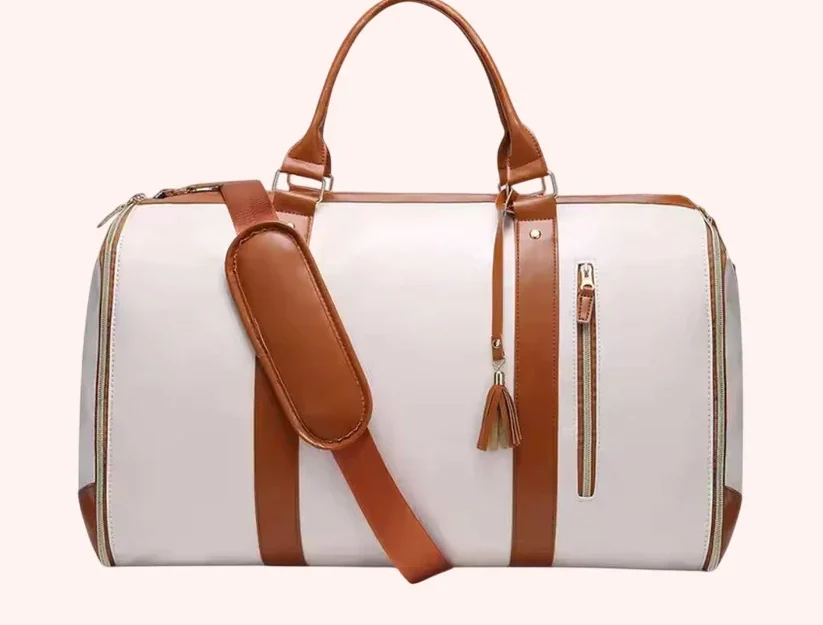
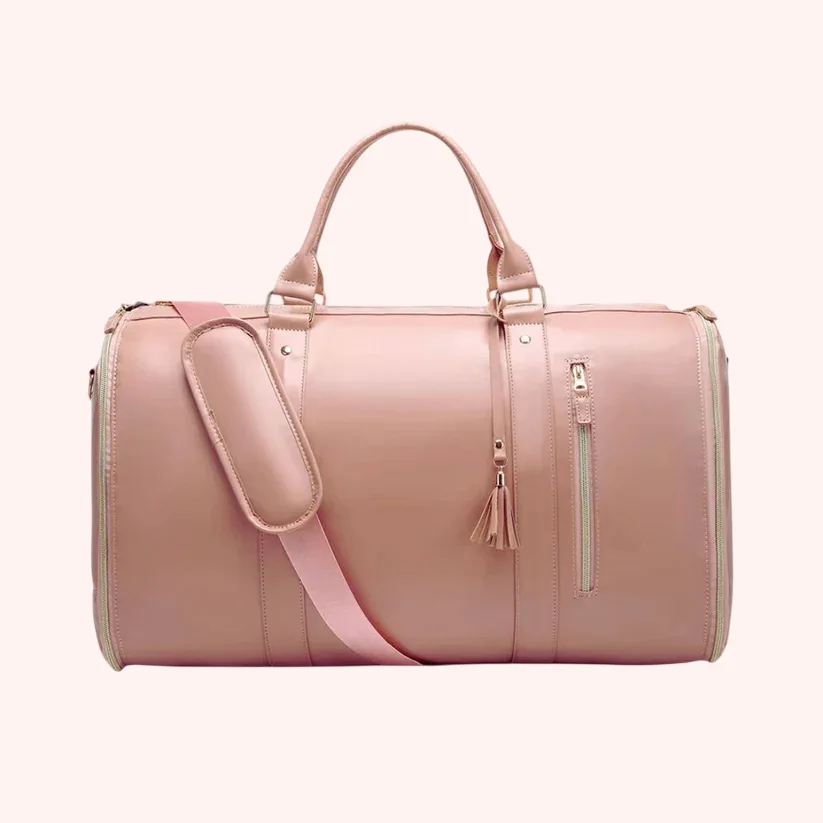
We make the PristineBag Travel Duffel, and it is clearly a carry-on bag. Packed full, it measures 20.5 × 12.5 × 10 in (52 × 32 × 25 cm), longer than any personal item limit in the table above. It will not fit under the seat as a personal item.
As a carry-on, it is honest to say it is about 1 in deeper than the 9 in limit at American, Delta, United, Alaska and JetBlue when packed full. It fits Southwest and Frontier on paper, and easyJet’s large cabin bag and KLM allow 25 cm of depth, which it meets within about 0.4 cm. A bag that is not packed full compresses, but we have not measured how much.
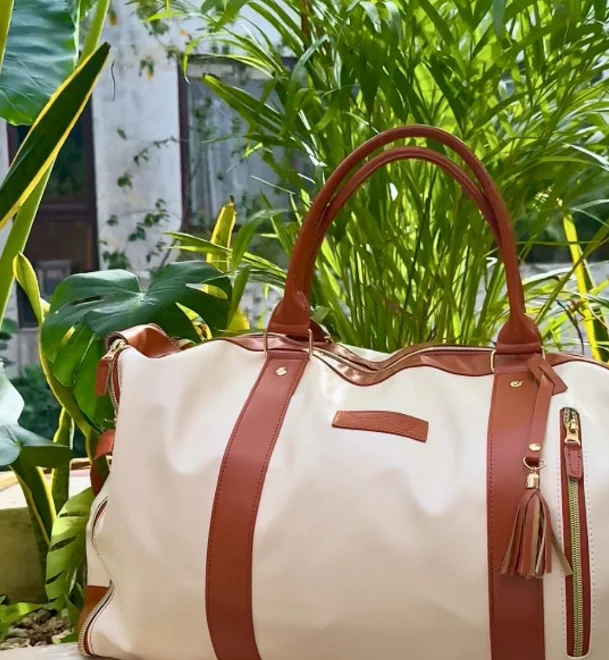
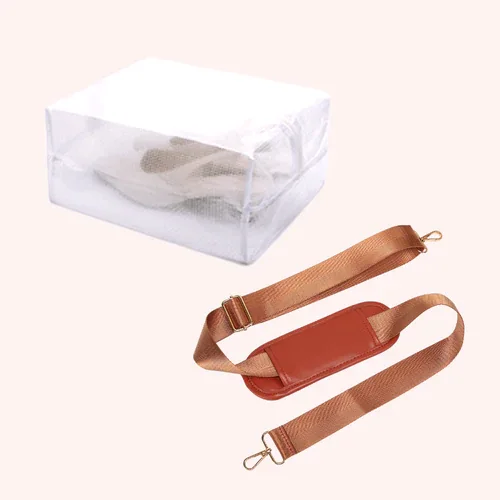
What it adds is organization a small under-seat bag cannot offer. It opens flat into a garment bag for one suit or dress, has a separate shoe compartment, and a trolley sleeve that slides over a suitcase handle. Pair it with a slim backpack or tote as your personal item, and you have a full outfit, shoes and a laptop covered on most standard fares.
Personal item and carry-on questions
Can a backpack be a personal item?
Yes, if it fits under the seat and within your airline’s limit, such as 17 × 10 × 9 in at United or 18 × 14 × 8 in at American. A large travel backpack counts as a carry-on instead.
Can I bring a purse and a personal item?
Usually not as two separate items. A purse is a personal item, and United, for one, says small purses or bags are not allowed in addition to your personal item and carry-on. Put the purse inside your other bag.
Is a duffel bag a personal item?
Only a small one. Most travel duffels are 20 in or longer, which makes them carry-ons. Our guide on whether a duffel bag can be a carry-on covers both cases.
What happens if my personal item is too big?
It may have to go in the overhead bin as your carry-on, or be checked if you already have one, which usually costs a fee. On a fare without a carry-on, an oversized personal item can cost you a gate fee.
Keep reading
More on carry-on rules