How to pack a carry-on (step by step)
Nine steps in the right order: shoes first, structured clothes flat or hanging, soft clothes rolled into the gaps, liquids on top, then measure the packed bag.
To pack a carry-on, put shoes and other heavy, rigid items in first, lay structured clothes flat or hang them, roll soft clothes into the gaps, and finish with your bag of liquids on top where you can reach it at security. Keep medication, valuables and chargers in your personal item. Then measure the packed bag, because a soft carry-on grows as you fill it.
That is the whole method in one paragraph. Below it is broken into nine steps, with the reasons behind each one, how the order changes for a duffel or for a suit, the carry-on packing tips that save the most space, and the security rules that decide what may go inside.
Before you pack a carry-on: check three things
Five minutes of checking saves you from repacking your carry-on bag at the gate. Look these up for every airline on your trip, connections included.
- The size limit. American, Delta, United, JetBlue and Alaska allow 22 × 14 × 9 in (56 × 35 × 23 cm) including wheels and handles. Southwest and Frontier allow 24 × 16 × 10 in. Our carry-on size table covers 19 airlines, checked November 2026.
- The weight limit. Most big US airlines publish none, but many others do. Lufthansa allows 8 kg, and KLM 12 kg for your carry-on and personal item together.
- What your fare includes. Some Basic Economy fares include only a personal item. If your bag must fit under the seat, you are packing a different bag.
If you are not sure whether your bag qualifies at all, our guide to what counts as a carry-on explains the rules.
How to pack a carry-on in 9 steps
1. Lay everything out, then remove a third
Put every item on the bed in groups: tops, bottoms, shoes, toiletries, tech. Most people overpack, so take something out of each pile before anything goes in the bag. If every top works with every bottom, you need fewer of both. This is the step most people skip when they pack a carry-on in a hurry.
2. Shoes go in first
Shoes are the heaviest and most rigid things you pack. In a wheeled carry-on bag, put them at the wheel end, so the bag stands upright and rolls without tipping. In a duffel, put them on the bottom along the sides, or in a separate shoe compartment if the bag has one. Stuff socks inside them and slip each pair into a bag to keep dirt off your clothes.
3. Add other heavy, rigid items
Your toiletry kit (minus liquids), a hair dryer, a book or a laptop sleeve go next, close to the shoes. Heavy items low and to one end keep the carry-on bag stable and stop them from crushing your clothes.
4. Lay structured clothes flat, or hang them
Shirts, blazers, dresses and trousers wrinkle where they fold. Fold them as few times as possible and lay them flat across the widest part of the bag. If you are bringing a suit or dress for an event, hanging it in a garment section is the most reliable way to keep it smooth. Our guide to packing a suit in a carry-on covers both methods.
5. Roll the soft clothes
T-shirts, knits, sleepwear, gym clothes and jeans roll tight and wrinkle less than folded ones. Rolled clothes also fill the space around shoes and corners, which flat-folded clothes cannot do.
6. Fill every gap
Socks, underwear, belts, chargers and swimwear go into corners and along the sides. A carry-on bag packed without gaps keeps its shape, and your clothes do not slide around and crease.
7. Liquids on top
Under the TSA liquids rule, carry-on liquids, gels and aerosols must be in containers of 3.4 oz (100 mL) or less, packed in a quart-size bag. Put that bag on top or in an outside pocket, so you can take it out at the checkpoint without unpacking.
8. Pack your personal item for the flight
Your under-seat bag holds what you need in the air and what you cannot lose: medication, passport, wallet, keys, phone, chargers, headphones and a sweater. If the overhead bins fill and your carry-on bag gets gate-checked, these stay with you.
9. Close, measure and weigh
Zip the carry-on bag closed and measure all three sides, taking depth at the fullest point. Alaska Airlines suggests on its carry-on luggage page that you measure soft-sided and expandable bags again once they are packed. Weigh the bag too if your airline has a weight limit.
Packing cubes, compression bags and other helpers
Packing cubes do not create space, but they make a carry-on bag easier to live out of. With one cube for tops and one for underwear and socks, you can find things in a hotel room without unpacking everything. Compression cubes squeeze out air and shrink a stack of knits, but a soft bag packed with them gets dense and heavy, and overfilling them can push its depth past the limit.
Two packing tips if you use them: choose cubes that match the shape of your bag, so they fill it edge to edge, and keep anything that wrinkles out of compression cubes, because pressure is what sets creases.
How to pack a carry-on for a weekend or a longer trip
For two or three nights, the same order applies with less in each layer: one pair of shoes in the bag, two or three tops, one bottom besides the pair you wear, and a small toiletry kit. A weekend carry-on bag often has room to spare, so you can lay everything flat instead of rolling.
For a week or more, rewearing is what makes it work. Pack five or six tops that match two or three bottoms, plan one laundry day on trips of two weeks, and buy full-size toiletries when you arrive. Our weekend trip packing list and the guide to packing a carry-on for a week have full lists.
Packing a duffel versus a suitcase
The order you use to pack a carry-on suitcase works for a duffel too, with a few changes. A suitcase has a frame, so its outer size stays the same however you pack it, and the wheel end is where weight belongs. A duffel has no frame, so it takes the shape of what is inside, and depth grows as you add things. Four packing tips for soft bags:
- Pack a duffel in layers, not a heap. Shoes and flat items along the bottom and sides, rolled clothes in a single layer on top.
- Keep the middle slightly loose. That lets you press the bag down to fit a sizer or a crowded bin.
- Flatten outside pockets. A full front pocket adds depth that counts at the sizer.
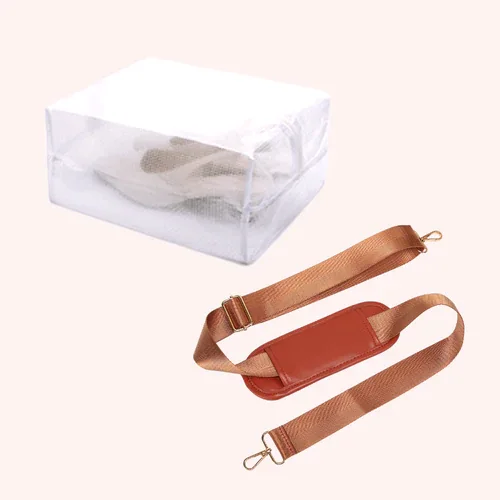
- Unclip the shoulder strap before you put the bag in a sizer, so it cannot catch.
For a full walk-through on soft bags, see how to pack a duffel bag and our guide on whether a duffel bag can be a carry-on.
How to pack a carry-on with a suit and shoes
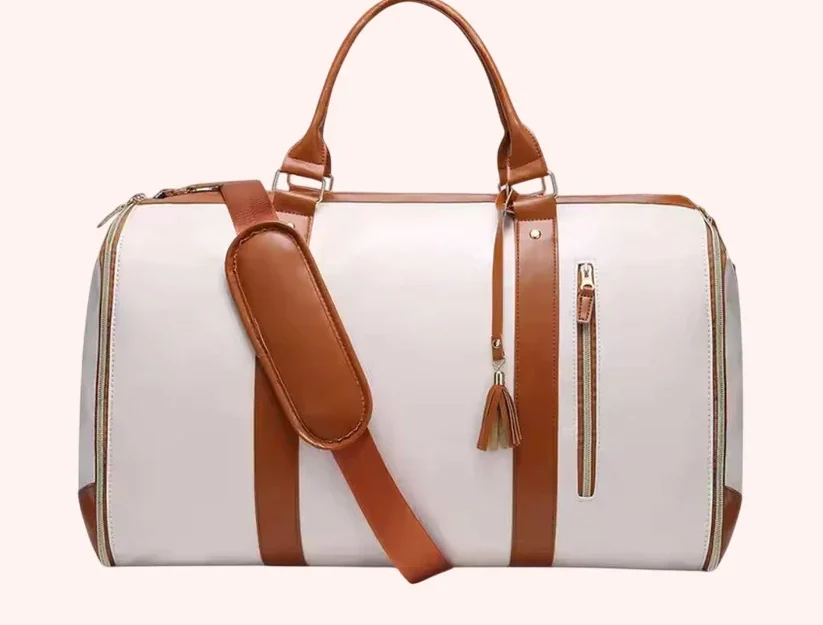
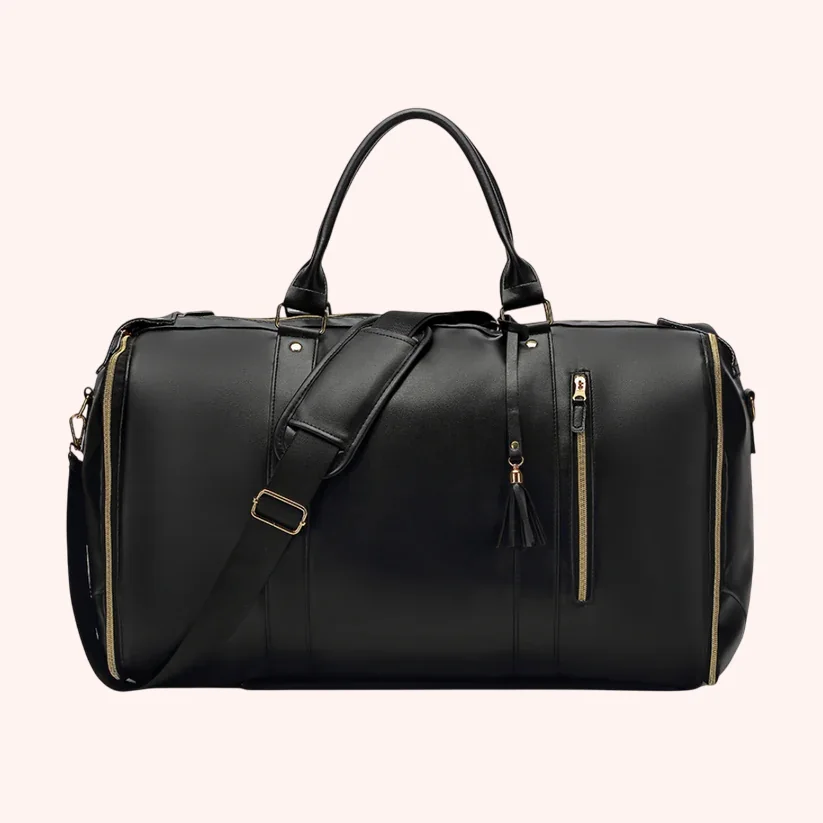
A suit or dress is the hardest thing to pack in a carry-on bag, and shoes are the dirtiest. We designed the PristineBag Travel Duffel around that problem, so here is how the nine steps look in our bag:
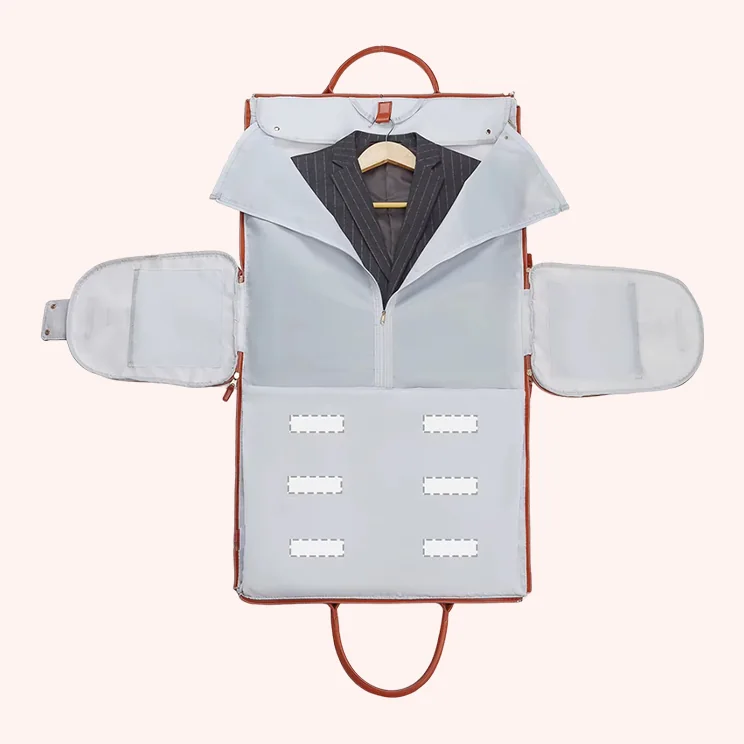
- Open the bag flat. It unfolds into a garment bag with a hanging section for one suit or dress.
- Hang the outfit. Button the jacket, hang it with the trousers or dress, fold the sides in and zip.
- Shoes in the shoe compartment. They stay separate from your shirts, and the clear pouch in the box takes a second pair or your toiletries.
- Everything else in the main compartment. Roll T-shirts, knits and sleepwear and lay them on top of the garment section.
- Phone and passport in the front zip pocket. Keep it flat so it does not add depth.

Now the honest part about size. Packed full, the bag measures 20.5 × 12.5 × 10 in (52 × 32 × 25 cm). That is about 1 in deeper than the 9 in limit at American, Delta, United, Alaska and JetBlue, while it fits Southwest and Frontier on paper. A bag that is not packed full compresses, but we have not measured how much. On a 9 in airline, pack it lighter than full and be ready to gate-check it. If you also check a suitcase, the trolley sleeve slides over its handle and the duffel rides on top.
10 carry-on packing tips that save space
- Wear your bulkiest outfit. Boots, jeans and your heaviest jacket travel on you, not in the bag.
- Plan outfits around two colors. Everything matches, so you pack fewer pieces.
- Use solid toiletries. Bar soap, shampoo bars and solid deodorant cannot leak and free up room in your quart-size bag.
- Decant into small bottles. A week of shampoo rarely needs more than a small travel bottle.
- Use shoes as storage. Socks, chargers and small items fit inside them.
- Bag your cables. A small pouch stops them from tangling around everything else.
- Pack one dressy outfit, not three. Rewear the shoes and accessories with it.
- Leave room for the way home. A bag that is full on day one will not close after shopping.
- Keep spare batteries in the cabin. The FAA requires spare lithium batteries and power banks to stay in carry-on baggage, and to come out if your bag is checked at the gate.
- Pack the night before. Lay it out, sleep on it, and remove one more thing in the morning.
These packing tips work for any trip length. If shoes are your biggest space problem, our guide to packing shoes in a suitcase covers heels, sneakers and dress shoes.
What not to pack in a carry-on
Size and weight decide whether your carry-on bag goes in the cabin. The TSA decides what goes inside it. Liquids over 3.4 oz (100 mL) belong in a checked bag. For everything else, from razors to camping gear, the TSA’s What Can I Bring? tool gives the official answer item by item. Check it before you pack anything unusual, because the final call at the checkpoint belongs to the officer.
Packing a carry-on: frequently asked questions
What is the best way to pack a carry-on?
Heavy, rigid items first, structured clothes flat or hanging, soft clothes rolled into the gaps, and liquids on top. Keep essentials in your personal item and measure the bag once it is packed.
Is it better to roll or fold clothes in a carry-on?
Use both. Roll soft, casual clothes to fill gaps, and fold or hang structured clothes such as shirts, blazers and dresses, which crease where they are rolled.
Where should heavy items go in a carry-on bag?
At the wheel end of a rolling bag and along the bottom of a duffel. That keeps the bag stable, makes it easier to lift into the bin, and stops heavy things from crushing your clothes.
How do I fit more in my carry-on bag?
Wear your bulkiest clothes, plan outfits that mix and match, switch to solid toiletries, and fill shoes and corners with small items. A tighter wardrobe saves more space than any packing trick.
How do I pack a carry-on for a business trip?
Hang or flat-fold the suit first, put dress shoes in a separate compartment or bag, and roll everything else around them. Keep your laptop and documents in your personal item so you can work on the plane.
Keep reading
More on carry-on rules