What is PU leather? (Is it real leather?)
PU leather is fabric coated with polyurethane and embossed to look like hide. What it is made of, how it is produced, how it compares with real leather and PVC, and how to make it last.
The short answer to “what is PU leather” is this: it is a synthetic material made by coating a fabric, often polyester, with layers of polyurethane (PU), a flexible plastic, then pressing a leather-like grain into the surface. It is not real leather and contains no animal hide in its standard form. You will also see it sold as faux leather, vegan leather, leatherette or pleather.
Below we explain what PU means, what the material is made of, how it is produced at a high level, how it differs from real leather and from PVC, how long it lasts, and how to care for it. We make a travel duffel with a PU finish, so we will also show you what that looks like on a real product.
What does PU mean on a label?
PU stands for polyurethane. On a tag or a product page you may see “PU”, “PU leather”, “PU fabric” or “PU material”. They all point to the same idea: a polyurethane coating, usually on a textile backing.
Polyurethane is a large family of plastics used in foam cushions, coatings, adhesives and synthetic leather. It is made by reacting two kinds of chemicals, diisocyanates and polyols, in a process called curing. The American Chemistry Council notes that fully cured polyurethane products do not contain diisocyanates.
What is PU leather made of?
A 2021 study from the FILK Freiberg Institute in Germany, published in the journal Coatings, describes the typical build of synthetic leather in four parts, from the inside out:
- Textile support: a woven or knitted fabric, often polyester, that gives the material its strength.
- Foamed middle layer: a soft, cushioning PU layer that controls how the material feels and flexes.
- Compact layer: a denser PU layer that seals the surface.
- Topcoat: a thin finish that sets the color, shine and grain.
The grain is not grown. It is embossed into the surface to look like hide. The authors also point out that polyester coated with PU or PVC is a fully fossil-based material.
Not every product follows this recipe. Some cheaper items use a thin single coat, and some higher-end ones use microfiber backings. A few products labeled “PU leather” are actually split leather, the lower layer of a hide, with a PU coating on top. Those contain animal hide, so if that matters to you, read the fiber content tag or ask the seller.
How is PU leather made?
At a high level, makers apply liquid polyurethane to fabric and let it set into a flexible film. The samples in the FILK study were made by two common routes:
- Reverse (transfer) coating: the PU layers are spread onto a textured release paper, the fabric is laminated on top, and the paper is peeled away once the layers have set. The paper’s texture becomes the grain.
- Coagulation: a PU solution is applied to the fabric and solidified in a bath, which leaves a fine, porous layer. A topcoat and embossing follow.
Both methods run on continuous rolls, which is one reason PU costs less to produce than leather. Production quality matters, though. The same study found residues of solvents such as dimethylformamide (DMF) and toluene in its PU reference sample, a reminder that not all PU is made to the same standard.
Is PU leather real leather?
No. Standard PU leather contains no animal skin. In the US, the FTC’s Guides for Select Leather and Imitation Leather Products say it is deceptive to call a product leather unless it is leather in all substantial parts. Materials that look like leather but are not should be disclosed with terms such as “imitation leather”, “not leather”, “vinyl” or “plastic”.
That is why many brands write “PU”, “man-made materials” or “vegan leather” instead of just “leather”. The word “leather” in “PU leather” describes the look, not the material.
Other names for PU leather, and what they mean
The FILK authors list more than ten market names for synthetic leather, and they note that a European standard, EN 15987, restricts how some of these terms may be used. In everyday shopping, this is roughly what each name tells you:
| Name | What it usually means |
|---|---|
| PU leather | Fabric coated with polyurethane |
| Faux leather, synthetic leather | Any leather imitation, PU or PVC |
| Vegan leather | A leather imitation with no animal products; usually PU, sometimes PVC or plant-based blends |
| Pleather | Informal name for plastic leather, PU or PVC |
| Leatherette, vinyl | Often PVC-coated fabric |
| Bonded leather | Not PU: ground leather scraps held together with binders |
| Bicast or split leather with PU | Real split leather with a polyurethane top layer |
The last two are the ones to watch. Bonded leather and PU-coated split leather contain animal material, so they are not vegan, and they behave more like a coated product than a full-grain hide.
How to tell if something is PU leather
The label is the quickest answer, since US rules expect imitation leather to be disclosed. Without a label, look at a seam allowance or the inside of a pocket. If you see a woven or knitted fabric under a thin coating, it is a coated material. Real leather shows a fibrous edge and irregular pores, while embossed PU often repeats the same grain pattern across a panel.
PU leather vs real leather
The two look similar from a distance but behave very differently. Here is the short version:
| PU leather | Real leather | |
|---|---|---|
| Made from | Fabric coated with polyurethane | Tanned animal hide |
| Tear strength | Lower | Much higher |
| Water | Sheds rain and spills | Absorbs water |
| Breathability | Low | High |
| Aging | Stays the same, then can crack or peel | Develops a patina |
| Care | Damp cloth, no conditioner | Needs cleaning and conditioning |
| Price | Usually lower | Usually higher |
In the FILK tests, the full-grain leather sample had about five times the tear resistance of the PU-coated textile (82.9 against 17 N/mm), while both reached about 200,000 flex cycles before small cracks appeared, with the leather going further. Our full comparison of PU leather vs real leather goes through each difference for travel bags.
PU vs PVC: what is the difference?
PVC (polyvinyl chloride), often sold as vinyl or leatherette, is the other common faux leather. Both are plastic coatings on fabric, and both are sold as vegan leather. The main differences:
- Softness: polyurethane can be made soft and flexible on its own. Flexible PVC relies on added plasticizers. The EPA notes that phthalates are used primarily as plasticizers in PVC products.
- Aging: PU tends to fail by hydrolysis, a slow reaction with moisture that makes it crack and flake. PVC can stiffen over time as plasticizers migrate out.
- Labels: the FTC lists “vinyl” as an acceptable disclosure, so a tag that says vinyl usually means PVC.
For a bag, the practical difference is small: both clean the same way and both should be kept away from heat and solvents. If a label just says “vegan leather” and the difference matters to you, ask which polymer it is.
Is PU leather good quality?
It can be, but the range is wide. A thick coating on a dense backing, with sealed edges and good stitching, makes a useful everyday material. A thin coating on a loose fabric can crack or peel quickly. PU material is a category, not a quality level.
Pros of PU leather:
- Lower price than leather of a similar look
- Sheds rain and spills well
- Wipes clean with a damp cloth and needs no conditioning
- Consistent color and texture across a product
- No animal hide in standard PU-coated fabric
Cons of PU leather:
- Tears more easily than real leather
- Breathes poorly, so damp items inside dry slowly
- Does not develop a patina
- The coating breaks down over time with moisture, heat and sunlight
- A peeled coating cannot be restored
- Made from fossil-based raw materials in most cases
How long does PU leather last?
There is no standard lifespan. How long PU lasts depends on the coating chemistry, its thickness and how the item is used and stored. Ester-based polyurethanes are more sensitive to moisture and heat, while ether-based ones resist moisture better but are more sensitive to light, according to the Fashion Museum Antwerp’s damage atlas for polyurethanes.
A bag flexes much less than a shoe, so PU holds up reasonably well in luggage if you keep it out of heat, direct sun and damp storage. Our guide on how durable vegan leather is covers the lab data and the habits that make it last.
Does PU leather peel?
It can. Peeling is the most common way PU leather fails: the top layers lose their grip on the fabric, usually at handles, corners and folds. Heat, sunlight, long-term humidity, solvents and dry cleaning all speed it up.
Once it starts, it cannot be reversed, only slowed and disguised. Our guide to fixing peeling faux leather shows how.
Is PU leather waterproof?
The coating itself sheds water, but products made from it are rarely waterproof, because water gets in at seams and zips. The FTC’s guides say “waterproof” should only be used when a product keeps water away from its contents under normal use for its anticipated life. Water-resistant is the honest term for most PU bags.
Is PU material safe?
The reactive chemicals used to make polyurethane are used up when it cures. According to the American Chemistry Council, fully cured polyurethane products do not contain diisocyanates. Manufacturing quality still varies, as the solvent residues in the FILK sample show.
If a new PU material item has a strong smell, let it air out in a ventilated room before you pack it. If chemical content matters to you, ask the seller which safety standards or restricted-substance tests the material meets.
How to care for PU leather
- Wipe it with a soft cloth dampened in lukewarm water, with a drop of mild soap for marks.
- Wipe the soap off with plain water, then pat dry.
- Let it air dry at room temperature, away from heaters and direct sun.
- Do not soak it, machine wash it or send it to a dry cleaner.
- Keep alcohol, acetone and solvent spot removers off it.
- Store it cool and dry in a breathable bag, not sealed plastic.
For stains and step-by-step cleaning, see how to clean a faux leather bag.

What a PU bag looks like in practice
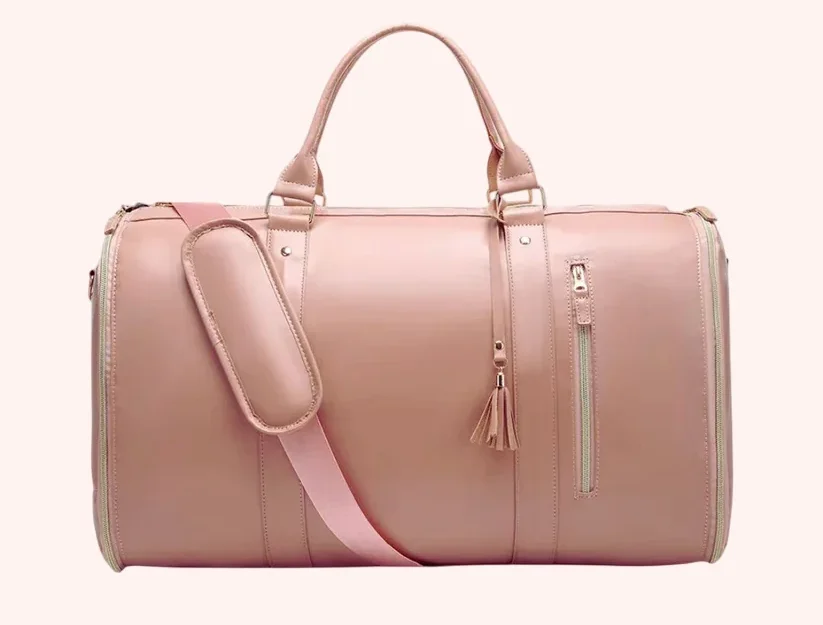
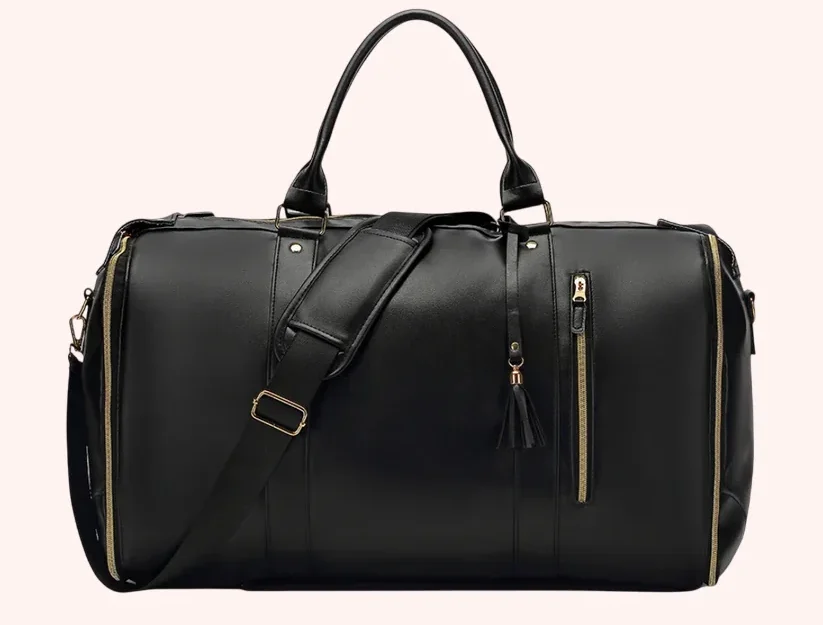
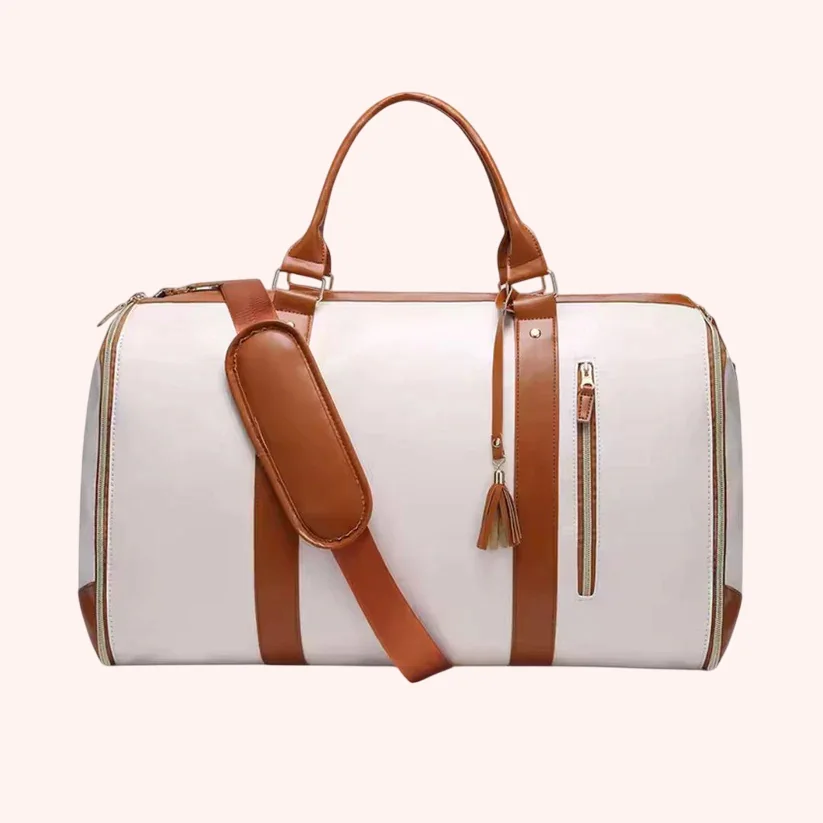
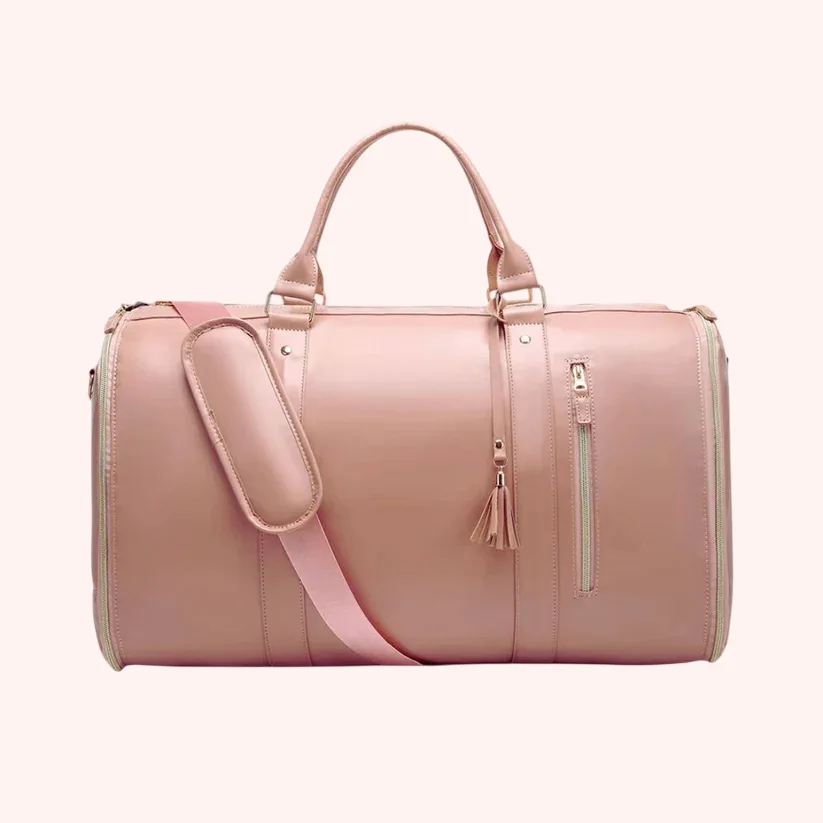
Our own bag, the PristineBag Travel Duffel, has a water-resistant PU finish with a vegan leather look. It is not waterproof. We clean it with a damp cloth, let it air dry and keep it out of the washing machine.
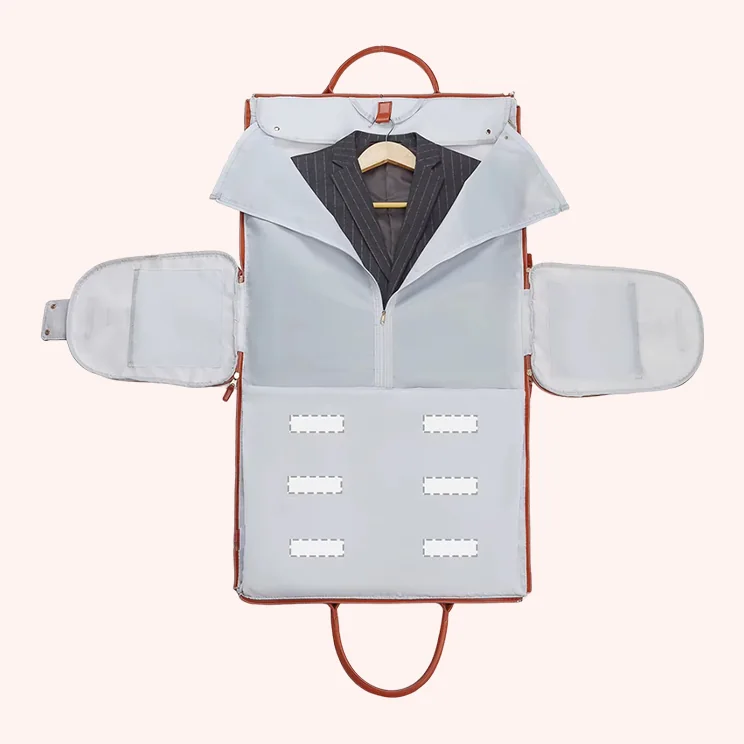
We chose PU for a travel bag because it wipes clean after airports and taxi trunks and needs no conditioning. The trade-offs are the ones above: it is not leather, it will not age into a patina, and it needs to be kept away from heat and damp storage. The bag opens flat into a garment bag for a suit or dress, has a separate shoe compartment, and slides over a suitcase handle.
If you are comparing materials across brands, our roundup of leather and vegan leather weekender bags lists options in both. More material and care guides are on our bag care hub.
Questions about PU leather
What does PU stand for in leather?
PU stands for polyurethane, the plastic used to coat the fabric. “PU leather” means polyurethane-coated material made to look like leather.
Is PU leather vegan?
Standard PU-coated fabric contains no animal hide, so it is sold as vegan leather. Some products use a split-leather backing under the PU, and those are not vegan. Check the label.
Is PU leather better than PVC?
PU can be made soft without plasticizers, while flexible PVC relies on them. Beyond that, it depends on the product. Both are plastic coatings, and both need the same gentle care.
What is a PU bag?
A PU bag is a bag with an outer surface of polyurethane-coated fabric. It looks like leather, sheds water well, and is cleaned by wiping rather than washing.
Keep reading
More on bag care and materials