How to fold clothes for travel (and save space)
Roll the knits, fold the crisp pieces, hang the jacket. Step-by-step folds for shirts, T-shirts, trousers, sweaters and dresses, plus how to save space.
The best way to fold clothes for travel depends on the fabric: roll soft knits such as T-shirts, leggings and sweaters, and flat-fold crisp shirts and trousers along their seams. Hang or bundle anything with structure, like a blazer or a formal dress. Then make every folded piece the same width, so the stack sits flat and cannot shift in the bag.
Those four rules cover most of a suitcase. The rest of this guide gives the steps for each garment, from how to fold shirts with a collar to how to roll clothes into tight cylinders that fill the corners of a bag.
Fold or roll clothes: which is better for travel
Neither method wins for everything. Rolling suits fabrics that stretch, because a roll has no sharp fold line and knits relax flat once you wear them. Folding suits woven fabrics that hold a crease, because you can put the folds where the garment already has a line.
Space is a different question. When you roll clothes, the cylinders fit into corners and around shoes, so less of the bag is empty. When you fold clothes, they form a flat, stable layer that does not move.
Most travelers end up doing both: rolled knits on the bottom, folded pieces on top.
| Garment | Best method | Why |
|---|---|---|
| T-shirts and tank tops | Roll | Knit fabric recovers from a curve |
| Dress shirts and blouses | Fold | Keeps the collar and front smooth |
| Jeans and chinos | Roll or fold | Sturdy cotton tolerates either |
| Dress trousers | Fold on the crease | Keeps the pressed line |
| Sweaters | Fold loosely or roll | Bulky, so keep folds few |
| Dresses and skirts | Fold or roll, by fabric | Jersey rolls, structured fabric folds |
| Suit jackets and blazers | Fold inside out, or hang | Protects the shoulders |
| Underwear and socks | Roll | Fills gaps and the inside of shoes |
Fabric also changes how much a fold matters. Merino wool can be folded and rolled and return to its original shape, according to Woolmark’s guide to travel clothes, while cotton and linen keep their creases until you steam or press them.
How to fold shirts for travel
Dress shirts need the most care, because poplin shows every line. To fold shirts with a collar, use this method. It gives you a neat rectangle about the width of a folding board.
- Button the collar and every second button down the front. Buttons keep the front from shifting.
- Lay the shirt face down on a flat surface and smooth it out with your hands.
- Fold one side in along the shoulder seam, about a quarter of the shirt’s width.
- Lay the sleeve down the back, flat and straight. If it is long, fold the cuff back up.
- Repeat on the other side so you have a long, even rectangle.
- Fold the tail up by a third, then fold once more so the bottom meets the collar.
- Turn it over. The collar should sit on top with the front smooth below it.
To fold shirts in a stack, alternate the collar direction so the stack stays level. A rolled pair of socks inside each collar keeps its curve. Our guide on how to fold dress shirts for travel goes into more detail.
Using a folding board
A folding board, or a stiff piece of card cut to size, makes every shirt the same width. Lay it on the back of the shirt, fold the sides and sleeves over it, fold the tail up, then slide it out. Same-width shirts stack like books, which is why it is the easiest way to fold shirts for a week of meetings.
How to fold a T-shirt for travel
You can fold shirts without a collar, like T-shirts, or roll them. Folding works well if you file them upright in a packing cube, so you can see every shirt at once.
- Lay the T-shirt face down and fold each side in so the sleeves sit on the back.
- Fold it in half from the hem to the neck.
- Fold it in half or in thirds again, depending on the depth of your cube.
- Stand it on its edge in the cube, like a file in a drawer.
How to roll a T-shirt
The ranger roll, also called the army roll, turns a T-shirt into a tight tube that holds itself together. It is the neatest way to roll clothes made of knit.
- Lay the shirt face down and fold the hem up toward the outside by about 3 in (8 cm), making a pocket.
- Fold each side in so the sleeves lie flat on the back.
- Roll tightly from the neck down toward the hem.
- Turn the pocket inside out over the roll to lock it closed.
You can roll clothes such as leggings, pajamas and gym shorts the same way. Pack the rolls side by side along the bottom of the bag, or in the gaps around shoes.
How to fold pants and jeans
Do not roll clothes with a pressed crease, such as dress trousers; fold them. Hold them by the hem, line up the legs so the front creases match, and lay them flat. Fold them once at the knee, or in thirds for a narrow bag.
For fewer marks, use the interlock method. Lay the waist of the trousers in the bag with the legs hanging over the side, pack other clothes on top, then fold the legs back over the pile. The pile becomes a soft core, so there is no sharp fold at the knee.
Jeans are sturdy enough to roll. Fold them in half lengthwise, then roll tightly from the waist down. Chinos can go either way; fold them if you want them to look pressed.
How to fold sweaters and knits
Sweaters take the most room, so fold clothes like these as little as possible. Lay the sweater face down, fold the sleeves across the back, then fold it in half from hem to neck. For a chunky knit, roll it instead, then press the roll flat on top of your other clothes.
Better still, wear the heaviest sweater on the plane. It is one less thing to fold, and a cabin can feel cool on a long flight.
How to fold dresses and skirts
Roll clothes made of jersey, such as knit dresses. Fold the dress in half lengthwise, fold in the sleeves, and roll from the hem up.
For a woven or structured dress, fold it lengthwise along the side seams, lay tissue on top, and fold it across the width once or twice. Skirts work the same way. Keep pleated skirts flat with the pleats lined up. For more, see how to pack a dress without wrinkles.
How to fold a suit jacket, or skip the folding
A jacket has shoulders, which are the part most easily crushed. To fold one, turn one shoulder inside out, tuck the other shoulder into it, then fold the jacket once across the middle. The lining is now on the outside and takes any rubbing. Our guide on how to fold a suit jacket for travel goes into more detail.
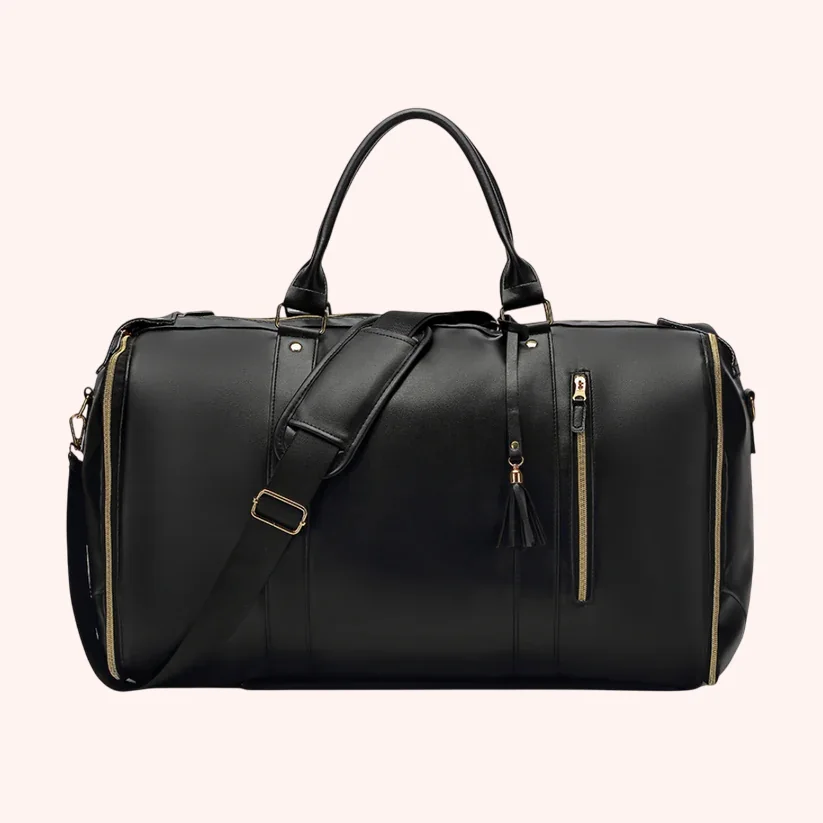
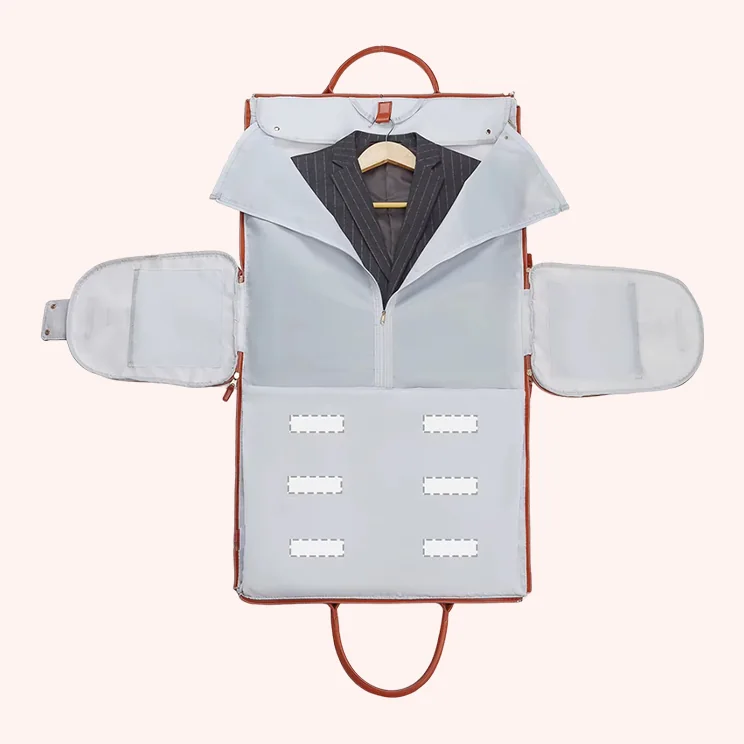
The other option is not to fold it at all. We designed the PristineBag Travel Duffel with a garment section: the bag opens flat, you hang one suit or dress inside on its hanger, fold the sides in and zip it closed. You still fold clothes for the main compartment, but the jacket travels on its hanger, and shoes go in their own separate compartment.
Underwear, socks, ties and accessories
- Socks: roll each pair together and push them into shoes or the corners of the bag.
- Underwear: fold in thirds or roll, then pack in a small pouch.
- Ties: roll loosely from the narrow end and place inside a shoe or a case. See how to pack a tie.
- Belts: coil around the inside edge of the bag, or lay flat along the side.
- Scarves: fold into a long strip and use as a soft layer between folded items.
Small things go in shoes. Our guide on how to pack shoes in a suitcase covers that, and where to put the shoes themselves.
How to fold clothes to save space in luggage
Saving space has less to do with a single trick and more with a few habits applied to every item.
- Make everything the same width. Fold clothes to the width of your packing cube or the bag’s base, so the layers stack without gaps.
- File fold instead of stacking. Stand folded items on their edge in a cube. You can see each one and take it out without unpacking the rest.
- Roll clothes for the bottom layer. Rolls fill the uneven space around shoes and the bag’s corners.
- Fill every gap. Socks in shoes, belts along the edges, a scarf on top.
- Use packing cubes, but do not over-fill them. A cube forced shut presses folds into creases.
- Leave a little room. You will come home with more than you left with.
If you are short on space, the bigger saving is taking less. Two or three colors that all match let you fold clothes for a week and still wear something different each day. Our guide on how to pack a carry-on covers the rest of the layout.

How to fold clothes for a carry-on
A carry-on leaves no room for loose folding, so fold clothes to the width of the bag’s base and pack them in two or three flat layers. Roll clothes that will not show creases, such as T-shirts, gym wear and pajamas, and lay them as the bottom layer.
Keep shirts and anything that needs to look sharp on top, where nothing presses on them. If you fold shirts for meetings, a slim shirt folder keeps two or three of them flat and the same size.
Wear the bulkiest items on the plane: the jacket, the sweater and the heaviest shoes. Then check the bag against your airline’s limits with our carry-on size guide before you fly.

Folding mistakes to avoid
- Pressing every fold flat with your hand. Soft folds leave softer lines.
- Folding across the chest when you fold shirts. Keep the folds below the chest, where they get tucked in.
- Trying to roll clothes with a pressed crease, such as dress trousers.
- Letting each item end up a different width when you fold clothes, so the stack slides.
- Packing laundry that is still damp. Moisture helps a crease set.
- Over-filling cubes until the zip strains.
Packing order after you fold
Once everything is folded and rolled, pack in this order: shoes and heavy items at the base, rolled clothes around them, folded trousers and sweaters next, shirts on top, and the jacket or dress last, either hung or laid flat across the top. This keeps the weight low and the crisp pieces away from pressure. Our guide on how to pack clothes without wrinkles explains why the order matters.
FAQ about folding clothes for travel
Is it better to roll clothes or fold them?
Rolling helps you fill corners and gaps, which leaves less empty space in the bag. It works best with knits. For crisp shirts and trousers, a careful flat fold is usually the better choice.
What is the best way to fold shirts so they do not wrinkle?
Button the shirt, fold the sides in along the shoulder seams, fold the tail up twice below the chest, and keep the folds soft. Pack the shirts on top of the other clothes.
Should I fold or hang a suit for travel?
Hang it if your bag has a garment section. If not, fold the jacket with the shoulders turned inside out and fold the trousers on the crease.
Are packing cubes worth it for folded clothes?
They keep a folded stack from shifting and let you file fold, which makes clothes easier to find. Fill them snugly, but not so full that the zip presses the folds flat.
Keep reading
More on packing tips

